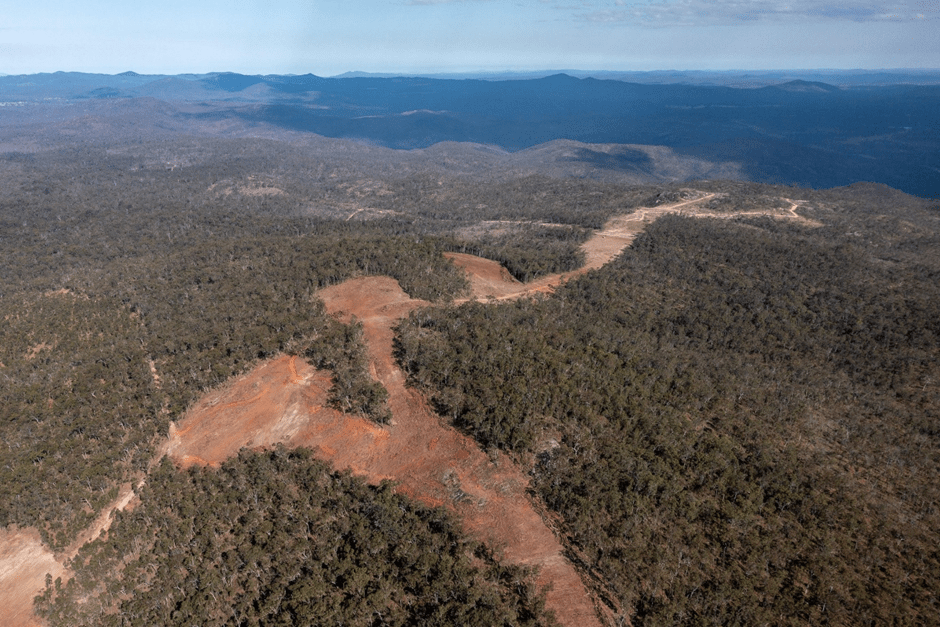
The wind turbine projects being built on the tops of the Great Dividing Range have very little sediment control. Some of the roads are very steep. I wonder how much sediment is washing into the little streams that host endangered species like the Magnificent Broodfrog. How far does the fine sediment flow? Many of these projects lie in the Great Barrier Reef catchment. Farmers must meet tougher and tougher standards regarding their properties.

For years I worked on huge infrastructure projects in Asia. Sediment control was carefully planned and monitored.
A neighbour has recently had his driveway engineered. After a relatively light rain event up here in northern Queensland, I noted that fine sediment from his driveway washed down the drains and disappeared. Sand carried for tens of metres down the roadside gutters while gravel pieces moved several metres. Here are a few photos. Note the silt still remaining on the road itself. The driveway gently slopes down to the old road-side gutters with a narrow concreted steeper area just before the gutters.


Up here, we can experience rain intensities that wash roads away and roadside slopes collapse. How much sediment will move into streams into our heritage areas from the wind turbine projects? Who is monitoring it? No-one has an obligation to report it. Thousands of kilometres of roads are being built. What is the cumulative impact?
I fight to have wind turbines built where they do not damage the Australian Environment.

 My Blog has become My Nuclear Journey