Do Nuclear Workers Get More Cancer?

Should we trust recent claims that low-dose radiation causes cancers? What is the truth? Do we really know?

Anti-nuclear groups in Australia have been given a new weapon for their arsenal of outdated fear campaigns. Recently published epidemiological studies linking cancers and heart disease to nuclear industry workers are being spread as established fact by Margaret Beavis, Climate Council, ACF and FOE and even the Labour Party.  

So much damage has been done by those who instil fear of ionising radiation in others. The “holier than thou” attitudes developed during the cold war are now very outdated. There are well-meaning groups of scientists, particularly epidemiologists, environmentalists and regulators who find it in their best interest to hang on to outdated information. Paradigms about radiation that began in the 50s and 60s have not changed despite all we have learnt about biological repair mechanisms and low dose radiation. It is a bit like comparing the safety of a modern aeroplane with the Hindenburg hydrogen airship. Why does this happen?

What is a Paradigm?

A paradigm is an interlocking set of assumptions about the operation of a complex system. It is a model of how the system works. Once accepted by the scientific community, a paradigm tends to channel attention and research funding into “acceptable” directions. Observations that fail to fit the paradigm may be ignored or suppressed. This is not a conspiracy but, instead, a reflection of human nature. When we believe something to be true, we discount alternative statements that contradict the “truth” as we perceive it. In general, a paradigm must be conclusively disproved before a new paradigm can be accepted.

It can really hurt to find out your beliefs of decades are not true.

Even twenty years ago, there were over 3,000 scientific papers published in reputable journals concluding that low dose irradiation is stimulatory and/or beneficial in a wide variety of microbes, plants, invertebrates, and vertebrates. Using the parameters of cancer mortality rates or mean lifespan in humans, no scientifically acceptable study was found which showed that less than 100mSv was harmful. https://pmc.ncbi.nlm.nih.gov/articles/PMC2477686/

A reward was even offered for any one report in English with scientifically acceptable evidence of harm (increased cancer death rate or decreased average lifespan) from low dose irradiation in normal (not immune deficient) humans or laboratory animals. The reward was not claimed.

In this blog, radiation levels greater than 100 mSv are not considered to be low dose. In some medical literature the term low dose is used for much higher levels of radiation. High doses of radiation have very different effects on living entities and can harm and kill. Repair mechanisms are overwhelmed.

Epidemiological Studies

In a classic science experiment, only one variable is changed at a time. All other factors remain the same. BUT this is only possible when working with simple systems such as in some basic physics or chemistry experiments. The real world is very complex, and biological systems are extremely complex. It becomes impossible to control all influencing factors – “confounding factors”. When confounding factors have more influence on the result then the variable under consideration, scientific evaluation becomes extremely difficult. This is the reason why it took so long to prove that smoking could cause lung cancer. The more complex the system studied, the more complex the mathematical statistics used becomes.

There are many types of epidemiological studies. When there is no control population used, and the data is simply observational and collected after the effects, a retrospective cohort study is the only choice. Cohort studies can never prove causation. They can only suggest a hypothesis for more detailed study. If data are collected after the fact, a cohort study becomes even more unreliable. When a medical effect is very rare, very large numbers of people are required for the study and statements of relative risk become almost meaningless. Attempts to discount confounding factors may be made. It is simply impossible to deal with all confounding factors.

To try and obtain a result, many mathematical manipulations are undertaken on the data. In studies about radiation, different groups sometimes publish completely opposite results because the mathematical formulae used on same data set are different.

For over 70 years, radiation epidemiologists have fallen into 2 camps. Those that fully support the Low No Threshold (LNT) Hypothesis to explain radiation health effects and those that spurn its use or simply accept the status quo for now for regularity purposes.

The LNT Hypothesis

The LNT Model was formulated on data from the 2 atomic bombs dropped on Japan at the end of WW2. It is based on the following assumptions:

  • Radiation exposure is harmful.
  • Radiation exposure is harmful at all exposure levels.
  • Each increment of exposure adds to the overall risk.
  • The rate of accumulation of radiation exposure has no bearing on risk.

No Hormetic Effect:

The model does not consider the possibility of any beneficial effects (hormesis) or stimulatory effects from low doses of radiation. It assumes that any increase in radiation exposure, however small, is detrimental. 

It Doesn’t Recognise Biological Repair Mechanisms:

Our knowledge of the biochemistry of molecule, cell and tissue damage and repair mechanisms has grown enormously since the 1950s.

Dr. Antone L Brooks, the Chief Scientist for the US Dept. of Energy’s Low Dose Radiation Research Program from 1998 to 2008 continues to publicize in his quiet manner that we knew better well over a generation ago that the assumptions of the LNT Model are not correct. He has stated many times that despite its simplicity when used for regulatory purposes, the LNT model overestimates the effect of radiation on living things and should not be used to estimate health effects. Many other voices say the same.

The LNT is used by many countries for regulatory practices. It is extremely conservative and hence standards for radiation protection are probably overly protective. For example, the US NRC and US EPA endorse the model, while other professional bodies such as the Health Physics Society and the French Academies of Science and Medicine deprecates it.

Unfortunately, this approach has led to unreasonable fear of radiation and excessive time and money costs. The LNT model works for high dose single exposures.

One of the organizations for establishing recommendations on radiation protection guidelines internationally, the United Nations Scientific Committee on the Effects of Atomic Radiation (UNSCEAR) that previously supported the LNT model, no longer supports the model for very low radiation doses.

The Australian Radiation Safety and Advisory Council in their Position Statement to ARPANSA on the use of the LNT model in ionising radiation protection states that:

“The appropriate use of the LNT model has enabled effective radiation protection systems. However, the inappropriate use of the LNT model has inadvertently increased community fear of ionising radiation. The Council advises that extremely low doses of ionising radiation may be associated with no or an extremely low risk of harm.

Incorrect emphasis on potential risks associated with low radiation doses and dose rates can have negative impacts as it can prevent health, medical, environmental, social and economic benefits being realised. In adopting the LNT model it remains essential to balance the low risks of low-dose ionising radiation exposure against the benefits of the radiation.  https://www.arpansa.gov.au/sites/default/files/rhsac_-_position_statement_on_the_use_of_the_lnt_1_may_2017

Cellular Repair Mechanisms

When it comes to cancer, the main concern is DNA damage.  Living tissue is made up of cells. Cells are mostly water.   If a radioactive particle enters a cell, it transfers a portion of its energy to the cell mainly by breaking the chemical bonds that hold the water molecule together.  This creates highly reactive, free radicals which can disrupt the cell’s chemistry including damaging the cell’s DNA. But do you realise that almost all free radicals are created by our use of oxygen to turn our food into energy?

Most of the DNA damage is single strand breaks, in which only one side of the double helix is disrupted. Single strand breaks are astonishingly frequent, >10,000 per cell per day.  Almost all these breaks are caused by free radicals produced by the cell’s own metabolism.  These are repaired almost automatically by the clever structure of the DNA molecule itself, with the undamaged side serving as a template.

But occasionally we get a double strand break (DSB). It’s the DSB’s that can start the process that may result in cancer.  Cell metabolism generates a DSB about once every 10 days per cell.  Average natural background radiation creates a DSB about every 10,000 days per cell.

The Cellular Changes Needed to Initiate Cancer Have Not Been Observed at Low Dose Rates

At least 6 to 8 of specific cellular changes must occur for cancer to result. The “Hit Theory” of DNA mutation as a cause of cancer is way out of date. 

These changes are only seen at single high doses of radiation.

Some of these hallmark changes include avoidance of immune destruction, deregulation of cellular energetics and resisting cell death.  A simple diagram of the hallmarks of cancer is shown below. Knowledge of cancer mechanisms has progressed enormously since this diagram was first formulated.
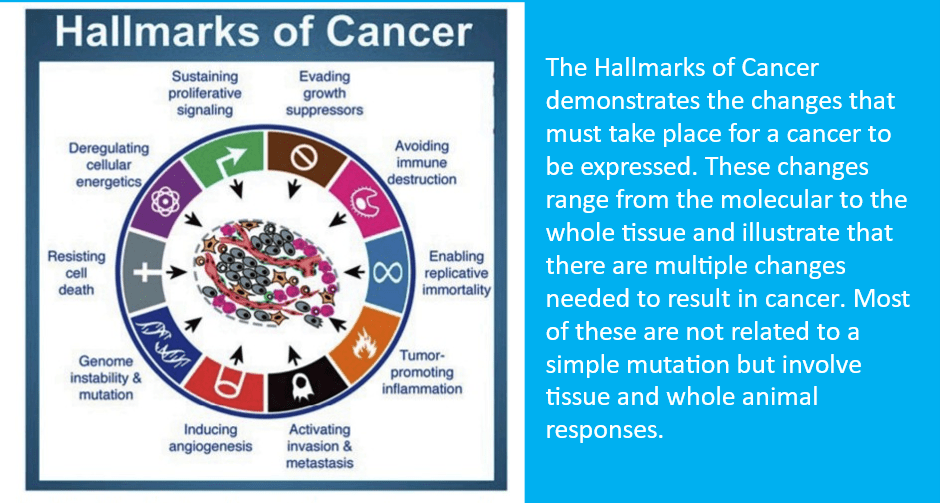
https://www.cell.com/fulltext/S0092-8674(11)00127-9 This paper has been cited >81,000 times. For a more up-to-date and detailed view see https://pubmed.ncbi.nlm.nih.gov/35022204/

The INWORKS Studies

The International Nuclear Workers Study (INWORKS) is a large series of international epidemiological papers on workers in the nuclear sector. It was launched in 2011 and coordinated by the International Agency for Research on Cancer (IARC). The study combines data from nuclear workers in the UK, US and France for pooled analysis. It seeks to gain greater knowledge relating to the risks of cancer and non-cancerous diseases linked to chronic exposure to low doses of ionising radiation at low dose rates.

INWORKS followed on from 15 Country Study published in 2007 https://pubmed.ncbi.nlm.nih.gov/17388693/ (Among 31 specific types of malignancies studied, it was concluded that a significant association was found for lung cancer and a borderline significant association for multiple myeloma with  a strong healthy worker survivor effect in these cohorts.

The healthy worker survivor effect has been assumed repeatedly whenever an analysis has shown that the cohort studied indicated less risk to nuclear workers. Slight variations in the cohorts are analysed by different techniques or parts of the cohort left out of the calculations or different methods are used to define the radiation levels experienced by workers. Many confounding factors were not considered. One of the most important of these is the lack of consideration of different background levels of radiation. Nor were there records of medical exposure such as CT scans or cancer treatment.

Most of the graphs shown have huge error bars yet excess relative risk is quoted with up to four significant figures. The slope of the LNT model is even used in some calculations. Many of the dozens of papers published are in the form of minimum publishable units, which makes it hard to fully understand exactly how some of the final analyses were undertaken and the conclusions reached. The INWORKS consortium has recently stated that they will not release their basic data so others can analyse it independently, claiming confidentiality problems. One of the basic tenets of the scientific method is reproducibility by others.

Some of the papers have been published recently in 2023 and 2024. A few of the relatively recent papers are:  https://www.bmj.com/content/382/bmj-2022-074520 https://doi.org/10.1016/S2352-3026(24)00240-0, and on circularity issues: Radiation Research 188, 276–290 (2017) DOI: 10.1667/RR14608.1. Haematological malignancies https://pmc.ncbi.nlm.nih.gov/articles/PMC11626443/ or the SELTINE study https://pmc.ncbi.nlm.nih.gov/articles/PMC9817793/#:~:text=3.2.&text=Supplementary%20Table%20S1%20shows%20the,CI:%200.69%E2%80%930.73). Some information on the cohorts used is given in https://pmc.ncbi.nlm.nih.gov/articles/PMC4703555/pdf/nihms723379.pdf

 It is the results on these studies that are being published ignoring the rest of the literature, particularly detailed criticisms of the work. The quoted error ranges are huge. Some of the graphs could even be used to suggest that low- dose radiation lowers the workers chance of cancer – a hormesis effect. For a more detailed critique of some of the studies see https://pmc.ncbi.nlm.nih.gov/articles/PMC5974569/pdf/10.1177_1559325818778702.pdf

Government websites simply republish the “results” without interpretation or perspective. Usually, the way the results in the papers are given would be meaningless to most readers. However, I did read in one abstract today that the radiation attributable absolute risk of leukaemia mortality in this population is low (one excess death in 10 000 workers over a 35-year period) https://pmc.ncbi.nlm.nih.gov/articles/PMC11626443/

So, should we trust recent claims that low-dose radiation causes cancers and other health issues? What is the truth? Do we really know?

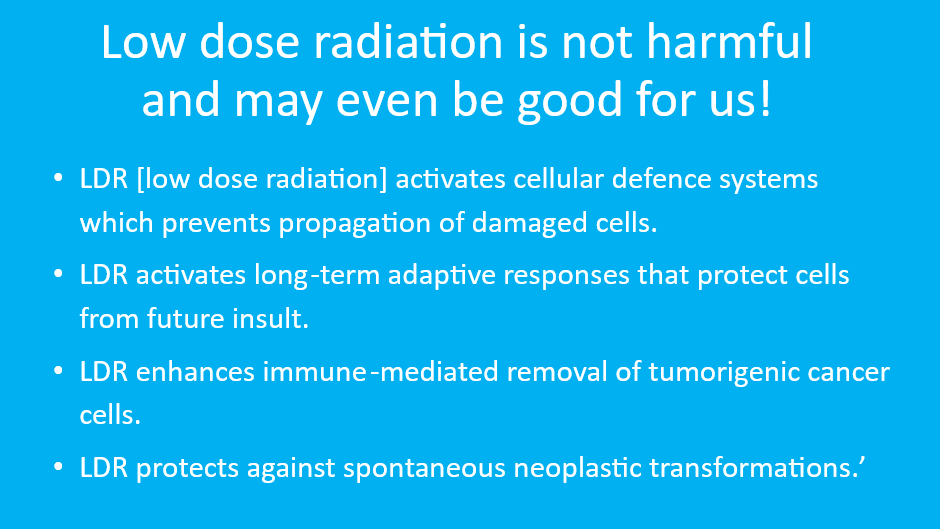
Some epidemiologists have been trying to prove that low-dose radiation is harmful and that the damage does accumulate for decades, and they are still trying. It is certainly possible that a few people may be affected in some way, but the risk is so small, one must ask why not concentrate on protecting people in other industries where carcinogenic substances are far more common.

We do know that most cellular responses to low-dose radiation are protective and positive. There are a couple of changes that may be positive or negative depending on the state of a cell. Nothing in life is perfect but the more biochemistry we learn, the more impressive is the chemistry of life. It seems likely, based on recent research work that cells may even need some low-dose radiation to thrive. After all we did evolve with ionising radiation.
Is it time that we found a “healthy” middle ground?

For more information about background radiation levels: https://onewomanjourney.com.au/2024/12/30/background-radiation-how-much-radiation-do-we-experience-on-earth/

Please let me know if you would like more information on any of the topics in this blog.
Whoops! He Bought Plutonium Online.

Many press stories were published onFri 21 Mar 2025 including this extract from Australian Associated Press.

“Homegrown scientist faces 10 years’ mail for importing plutonium.  His package delivery locked down his street as special agents in hazmat suits swooped. Now he will be the first person ever to be sentenced under a decades-old law.

Sydney ‘science nerd’ may face jail for importing plutonium in bid to collect all elements of periodic table

Emmanuel Lidden, 24, to learn fate after breaching nuclear non-proliferation laws by shipping samples of radioactive material to parents’ suburban home.

A “science nerd” who wanted to collect all the elements of the periodic table could face jail time after ordering radioactive material over the internet.

But Emmanuel Lidden, 24, will have to wait to learn his sentence after breaching nuclear non-proliferation laws by shipping samples of plutonium to his parents’ suburban Sydney apartment.

Lidden pleaded guilty to offences under Australia’s Nuclear Non-Proliferation Act that carry a possible 10-year jail sentence and is due to receive his sentence from the judge Leonie Flannery on 11 April.

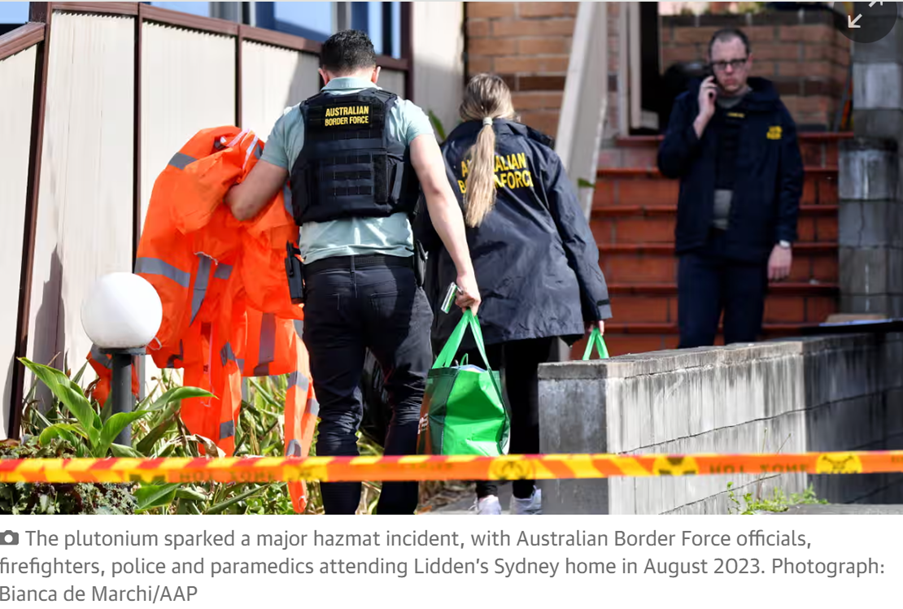
The importation sparked a major hazmat alert, with Australian Border Force (ABF) officials, firefighters, police and paramedics all attending the scene in August 2023.

Far from there being any intention of building something nefarious like a nuclear weapon, Lidden’s lawyer John Sutton described his client as an “innocent collector” and “science nerd” who had been left flipping burgers after being sacked from his job because of the investigation.

“He did not import or possess these items with any sinister intent … these were offences committed out of pure naivety,” Sutton told Sydney’s Downing Centre district court on Friday.

“It was a manifestation of self-soothing retreating into collection, it could have been anything but in this case, he latched on to the collection of the periodic table.”

Lidden had also been a keen collector of stamps, banknotes and coins.

But prosecutors said describing the young man as a simple collector and science nerd was a mischaracterisation.”

https://www.theguardian.com/australia-news/2025/mar/21/emmanuel-lidden-sydney-science-nerd-importing-plutonium-

An Earlier Press Report

David Southwell’s article for the Daily Mail Australia was published on 15 December 2024.

A science enthusiast is facing 10 years’ jail for importing nuclear material even though it was found to be harmless. 

Emmanuel Steven Lidden, 24, was arrested in August 2023 when officers in full hazmat suits swooped on his parents’ Arncliffe unit in southern Sydney, blocking off the street and evacuating neighbours.

They confiscated plutonium and depleted uranium in decorative vials and polymer cubes that Lidden kept by his bedside after buying from a US science collectables website to complete a real-life periodic table.

Scientists found the samples were harmless, but Lidden pleaded guilty to importing nuclear material into Australia and possessing nuclear material without permission, which could land him in prison for over 10 years. 

Lidden’s lawyer John Sutton said the anti-terror laws were clearly not aimed at people like Lidden.

‘These laws were created to protect society from terrorists and people who intend to cause mass destruction, not naive young science fans,’ he told the Daily Telegraph.

The laws were created in 1987 and Lidden is the only person to have been prosecuted under them. 

Asked about the appropriateness of pursuing Lidden, a Commonwealth Director of Public Prosecutions spokeswoman said it ‘conducts all prosecutions in accordance with the Prosecution Policy of the Commonwealth’.

https://www.dailymail.co.uk/news/article-14193785/Emmanuel-Steven-Lidden-plutonium-arncliffe.html?ito=native_share_article-nativemenubutton

The Online Store

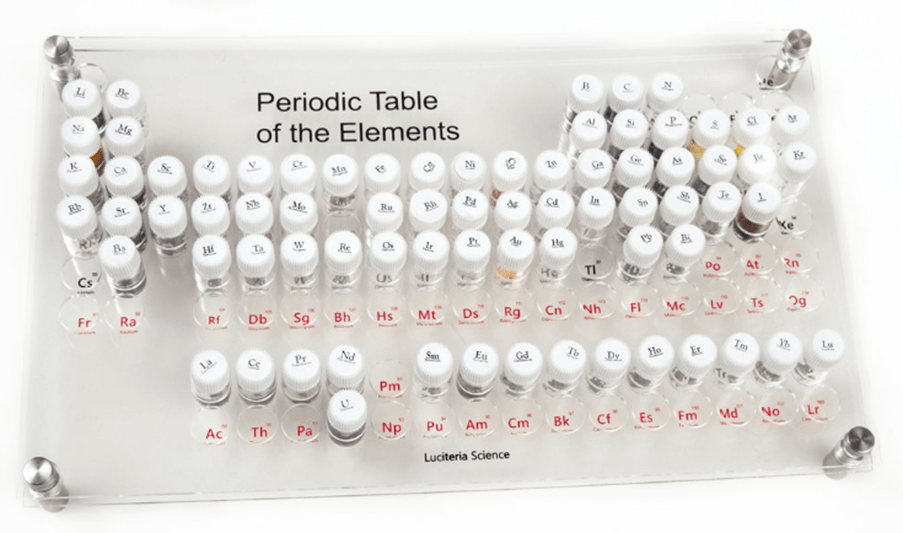
 Lidden ordered the materials from an online store in the US. As the online store says Collecting elements is a fun way to learn about chemistry and nature in general. They have a range of display cases and element samples made to fit the different display cases. The cheapest one is shown below.

Originally, five radioactive elements were available for sale. The site warns – Don’t worry about their safety. Because of the small size samples their level of radioactivity is far too small to be hazardous to health so long as you keep these well out of the reach of children. Accidental ingestion, or particulates which are allowed to become airborne where they could be breathed in, do pose a serious health risk.

The more expensive kits use lucite cubes or glass vials. The containers used to hold the samples would have stopped any alpha rays. The uranium would have looked like this:

Many Elements are Radioactive

Most elements have one or more radioactive forms that occur naturally as a percentage of the whole. For example, potassium – 40 makes up about 0.012% or 120 parts per million of natural potassium. All our food is radioactive as are our bodies. Sleeping next to your spouse provides you with more background radiation. Potatoes are radioactive as are bananas. For more information on background radiation see my blog post. https://onewomanjourney.com.au/2024/12/30/background-radiation-how-much-radiation-do-we-experience-on-earth/

Interestingly, bismuth is not classified as radioactive and is sold as a treatment for travellers’ tummy wogs. Actually, it has no stable isotopes and a very, very long half-life.

Is Plutonium the Most Dangerous Substance on Earth?

As the late John Fremlin, professor of radioactivity at Birmingham University, famously advised a public inquiry, plutonium can be sat upon safely by someone wearing only a stout pair of jeans. At Harwell in the 1950s the newly-crowned Queen Elizabeth was handed a lump of plutonium in a plastic bag and invited to feel how warm it was.  https://www.neimagazine.com/uncategorized/the-drama-of-plutonium/?cf-view

Plutonium is radioactive, but it doesn’t seem that harmful at first glance. It looks like any other metal, with a silvery sheen that turns dull in contact with the air. Queen Elizabeth II held a piece during a visit to Britain’s Atomic Energy Research facility at Harwell in 1957. It was warm to the touch, but it didn’t hurt. 

According to some references the incidence happened in 1956 at the opening of the Calder Hall UK. A young Queen Elizabeth was invited to handle a lump of plutonium and feel the warmth of the extraordinary material, which she did. The shielding was a plastic bag and I presume the royal gloves. The Queen outlived almost all her contemporaries. (D Fishlock. ‘The Last Retort.’ Chemistry World 99, March 2005.)

According to the World Nuclear Association, even eating plutonium doesn’t really do any harm, although it’s definitely not recommended! https://www.space.com/what-is-plutonium

Galen Winsor

Galen Winsor worked with plutonium for over 3 decades in the US. In the video below he talks about his experiences. Then he talks about his utter dismay when the Hi-Level Waste Disposal Act of 1982 was passed as part of “The Nuclear Scare Scam”- (about 26minutes into the video). This is a fascinating video for those interested in plutonium.

Galen Winsor – What stopped the plutonium economy? https://www.youtube.com/watch?v=8VvGw1tkT1Q

It is time Australia dealt with real risks appropriately rather than over-reacting to trivial issues. Fear of radiation is both costly and ignorant of the science.

The Effect of False Fear of Low-Dose Radiation – Fake Graph of Fukushima

Japanese Tsunami March 2011

A magnitude 9.0 earthquake, centred to the east of Sendai caused  a wave 10m high travelling at 800 kph .  The highest wave hitting the coast of Japan was 23m. It travelled inland for 10 km in some places. The Hawaiian Islands had waves over 3 metres high. As many as 19,500 lives were lost from both the earthquake and tsunami.

Misinformation

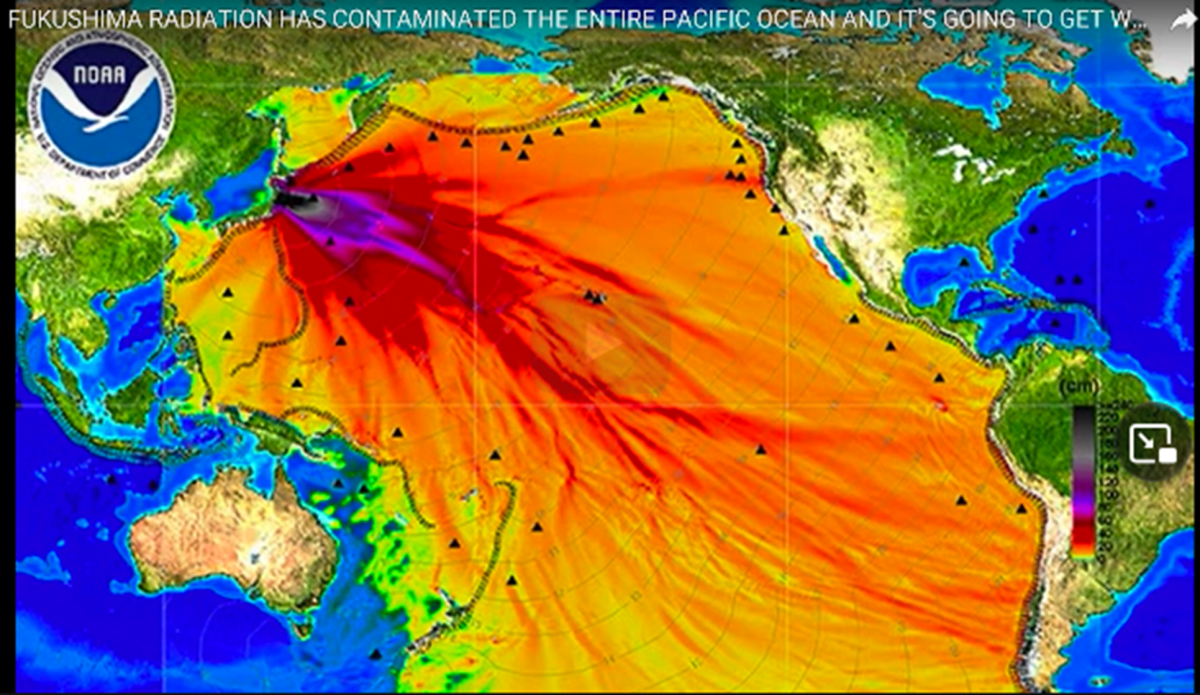
The following figure, with the added title “FUKISHIMA RADIATION HAS CONTAMINATED THE ENTIRE PACIFIC OCEAN AND ITS ONLY GOING TO GET WORSE!” was repeated over and over again on the web by various “green” groups.

Yes, the figure was produced by NOAA (National Oceanic and Atmospheric Administration of the US Government). BUT it is a graph of WAVE HEIGHTS after the tsunami. NOAA does not measure radiation levels.

A similar graph has been used for years by Helen Caldicott including during a presentation to Teals before the last election. Helen’s graph had a logo from a company in Australia that does undertake radiological measurements. The company stated on their website that it was not their work and that their logo was falsely included. She must have known for nearly ten years that the graph was false. I am also horrified by nuclear war and nuclear bombs and admire her work in this area but not at the cost of truth about low dose radiation.

Nuclear power plants and nuclear bombs are very different. I hate nuclear weapons. However, the use of falsified information when advocating for the banning of nuclear weapons or nuclear power is not OK. It is particularly abhorrent when scientific data is used in a way that the author knows to be untrue. I was told to use this technique in an environmental campaigning course by a famous international “Green” organisation.

These types of fear peddling are totally unethical, particularly when they pretend to be scientific in nature.

Why Do the Media call the Tsunami, the Fukushima Nuclear Disaster?

How many deaths could have been avoided if suggestions for evacuation or shelter in place standards suggested by the IAEA had been used. But Fear and Panicked Evacuation of about 100,000 people was responsible for 2313 disaster-related deaths among evacuees from Fukushima prefecture.

An old nuclear power plant overdue for decommissioning was damaged at Fukushima Daiichi by a wave 13-15m high. The placing and tsunami protection of the Daiichi plant assumed a 3m wave.

Eleven reactors at four nuclear power plants in the region were operating at the time and all shut down automatically when the earthquake hit. Subsequent inspection showed no significant damage to any from the earthquake itself.

The residual heat cooling systems worked for 8 out of the 11 power plants. At Fukushima Daiichi, electrical power from all 6 external sources stopped and the generators turned on until the tsunami flooding disabled 12 0f 13 backup generators running the cooling systems. Switching gear was also damaged.

Heat built up causing steam in the cooling systems. Hydrogen was produced by the steam reacting with exposed Zircaloy cladding. The containments were filled with inert nitrogen, which prevented hydrogen from burning in the containment. However, the hydrogen leaked from the containment into the reactor buildings, where it mixed with air and exploded. 3 of the 4 reactor buildings were damaged by hydrogen explosions. This was not a nuclear explosion. It was simple chemistry. To prevent further explosions, vent holes were opened in the top of the remaining reactor buildings. All reactors were stable within 2 weeks.

Three Tepco employees at the Daiichi and Daini plants were killed directly by the earthquake and tsunami. There have been no deaths or cases of radiation sickness from the nuclear power plant incident. One man from the plant died of cancer died soon afterwards but it is thought to be unrelated.

But in contrast there were 2,300 deaths caused by fear of radiation that triggered the evacuation.

Government nervousness to this day has delayed the return of many evacuees to their homes. Concerns about radiation in the sea caused panic even in the USA and some people made themselves sick with overdoses of iodine.

Tritium.

About 18 months ago, South Korea and China advised their citizens to stop eating seafood. Water used to cool the Fukushima reactors had been decontaminated and stored in large tanks and was finally to be released to the sea by Japan. The IAEA carefully monitored the releases. Korean fishermen were suffering loss of income as a result of the bans. After Korea monitored the sea water, they reversed their advice. China has only recently lifted their ban as they could not detect any contaminants. I followed the data for a while. Sometimes the tritium levels were so low in the discharge, the discharge water was diluting the tritium levels in the the sea water.

Tritium is created every day in our atmosphere and comes down in the rain, ending up in the sea. This natural process is the overwhelming source of tritium in the ocean.

For more of my blogs about tritium, see https://onewomanjourney.com.au/2023/08/25/tritium-trivia/

https://onewomanjourney.com.au/2023/08/31/its-raining-i-might-get-tritium-in-my-hair/

https://onewomanjourney.com.au/2023/09/06/the-iaea-and-fukushima-water-release/

https://onewomanjourney.com.au/2023/09/09/south-korea-monitors-fukushima-release/

Why Do We Fear Radiation? 2 Blog by Pamela Jones

Nuclear Radiation 101

How much do you know about nuclear radiation? Here is an opportunity to learn about it in an easy manner. Many of you will know far more about radiation than shown here. However, you too can enjoy these great video segments.

Yes, Earth is a radioactive planet. But just how radioactive is the zone in which we live? Is it dangerous and harmful? And if it is, when is it harmful? In order to really examine these questions, it is important to understand the basics.

There are lots of units used in the nuclear radiation field and it is important to understand what these units mean. Scientists have become very clever at measuring extremely low levels of everything from chemicals to radiation . Just because something can be measured does not tell us whether something is harmful to life or critical for its existence .

In order to illustrate some basic concepts and the language used, I am showing some parts of a few video presentations which describe these concepts in a clear manner in this blog and the next. Each video segment is about 6 minutes long. The full videos are available on YouTube

What is Radiation by the Canadian Nuclear Safety Commission.

Types of Radiation by Dr Don Lincoln of Fermilab 2017

Is Radiation Dangerous by Dr Don Lincoln of Fermilab 2017

Enough for today! Each new blog will provide more information such as the variability of background radiation on our planet.

But before you go, I would like you to consider the following question. I am about to hand you a kilogram of a radioactive substance. I have 2 choices. One has a very short half-life and one has an extremely long half-life. Which one is the safest?

Help, It Rained, and I Have Millions of Tritium Atoms in My Hair!

In my last couple of posts, when trying to picture what enormous numbers mean, it was shown that 3 big teaspoons of natural rain falling on my head in Australia would contain about a million tritium atoms. This sounds really scary but as I will gradually show, it is of no concern. Washing our hair would increase the amount.

Tritium forms in our atmosphere every day when cosmic rays hit gases in the air, mostly nitrogen. It is washed down into rivers and streams to the ocean as well as falling directly into the ocean. Tritium forms a minute part of the background radiation that surrounds us always. Life evolved on Earth at a time when background radiation levels were 5, maybe even 10 times higher than today. All life with its complex biochemistry deals with low radiation levels so well, that there was never a need to be able to sense radiation and hence avoid it.

Tritium is even less dangerous than most sources of ionizing radiation. It gently sends out low energy beta rays. Too much of anything can kill us. High dose radiation is dangerous, and we need protection from it.  The bigger the ray particle and/or the energy involved, determines just how harmful various forms of radiation are. Tritium’s beta rays are low energy electrons. It has a half life of about twelve and a half years. The rays are so weak, they cannot penetrate the skin. If swallowed most of it leaves as water in our urine within a day or so. If tritium water vapour is breathed in the World Health Organisation standard for drinking water is 10,00, it leaves again within minutes.

This is an ironic look at statements made out to be scientific fact. Most of the fear about radiation is not true and certainly not scientific fact.

I am still scared! A million sounds such a lot!

If you read my earlier posts on tritium, you may recall that 1 TU (Tritium Unit) is one tritium atom in 1018 hydrogen atoms. This is far smaller than one person among all the people on earth. You need to visualize one person only on as many planets as there are people on earth all with similar populations as Earth. Three big teaspoons of water contain 12*1023 hydrogen atoms. One million in 12*1023 is equivalent to 1 in 1018. It is mind boggling small.

Australia receives between 2 and 3 TU in rain falling on our land. 1TU is equivalent to 0.118 Bq /L of water.  One becquerel (Bq)is defined as the activity of a quantity of radioactive material in which one nucleus decays per second. The World Health Organization standard for drinking water is 10,000 Bq/L. To reach the same levels of radioactivity in 3 big teaspoons of our rainwater you would need to drink about a quarter of a million litres of water in one day.  Whoops! A small fraction of that amount of water as just H2O would kill you.

The human body has 30 to 700*1012 cells. Another enormous number.

So single strand DNA breaks occur naturally in the whole human body over 1016 times a day. This is another enormous number. Our bodies repair this damage.

These slides have been taken from a talk I gave to a group of CSIRO alumni.

The message is that the radioactivity associated with the Fukushima discharge will not harm anything physically. Fear may cause damage to many livelihoods.

When Quick Decisions Lead to Wrong Conclusions

The final step: making sure to put numbers in their right context. Are we looking at the whole picture? What works for some people may not work so well for others.

There is a tremendous amount of excellent technical information about radioactivity on the web, but it is often hard for anyone without that specific training to understand. There are also a lot of misleading statements and conclusions on the web. These even appear in peer-reviewed scientific journal articles such as the Chinese paper given as a link in my blog Tritium Trivia. This paper showed the results of modelling various releases of tritium water from Fukushima. Unfortunately, the last step was forgotten. Showing great expanses of red all over the Pacific Ocean would lead nearly everybody to say “How terrible! Japan is polluting the Pacific Ocean with radioactive material.” However, at the end of the document the background levels of tritium in the Pacific Ocean are quoted and this puts the release data into perspective. But nowhere in the paper was the context of the data given, that is that the levels of tritium were so low compared to normal background levels that they would be impossible to distinguish from the background variability.

I have made the decision that I will try to make my blogs as easy to read as I can so that they are suitable for most users of the web. This is not easy with technical information and my background of writing technical reports. Word has an editor function that allows you to calculate the readability of the document. Yesterday, for the very first time I managed to achieve my goal.

I was so excited that I quickly finished the blog and published it only to realize within minutes that I had forgotten a crucial step. I had jumped to the conclusion too quickly and not fully put the information into context. I rapidly edited the post and republished it. However, my subscribers received a set of comments that were not quite right. In my joy of finding a way to explain just how low tritium levels can be, I forgot just how many hydrogen atoms are in a little water. 18 g of water (one mole for the technocrats) contains 6*1023 molecules of water, 12*1023 hydrogen atoms and about a million tritium atoms.  This is still just as teeny in radiation terms but the numbers 1 and a million sound so different. 1TU is only 0.118 Bq/L. I will explain what this means in future blogs.

I apologize to my subscribers. At my age you are allowed to call it a senior moment. However, I suspect that in our current haste over climate change mitigation, we are all making similar mistakes. We do the first part of the work but then forget to really look at the big picture and put everything into context.

It’s Raining! I Might Get Tritium in My Hair?

True or false?

True, and this blog will tell you why it happens.

We all have trouble looking at very big or small numbers and understanding their size and importance. I am one of those lucky people who have less trouble than most. This has had its downsides too.  As a child I loved mathematics and algebra. I saw the patterns in numbers easily and it was all a big game to me until I was bullied at a small country school for being different. I was tied to a post, day after day, mocked at, spat at, and even pummeled with food scraps.

Now I am a senior, maths is not so easy, but I will try and make some numbers about radiation levels easier to understand.

Tritium is a natural substance.

Tritium is formed in minute quantities every day in our atmosphere. Cosmic rays from space hit the gases in the air, mainly nitrogen, forming tritium. Tritium is a type of hydrogen atom with 2 extra neutrons in its nucleus. Tritium quickly becomes part of a water molecule.  Instead of a water molecule with 2 atoms of ordinary common hydrogen with one atom of oxygen (H2O), a few molecules of water are HTO. The chemistry of both is virtually identical.  The mixture comes down as rain.

Just how many water molecules have tritium in them? Well, this is where the big and little numbers come in, making the situation hard to visualize. A new unit was created to help scientists assess the meaning of various concentrations.  1 TU or tritium unit equals 1 tritium atom in 1018 atoms of hydrogen. 1018 is 1 followed by 18 zeros. I find that hard to visualize. Let’s try. There are 8 billion people on Earth, that is 8,000,000,000 people. That is only 8 with 9 zeros. So, we have to imagine the same number of planets as there are people on the earth, with populations similar to earth to be in the right ballpark.  So TUs are like one tritium or one person out of all those people on all those planets put together.  I still find that hard to visualize, but it does tell me that finding 1 tritium atom in all those ordinary hydrogen atoms looks impossible.  Yet scientists around the world can and do measure tritium levels in rain, river and ocean water and ground water. In Australia, ANSTO publishes some of this data.

So how high are tritium levels in rain? It is seasonal and dependent on rainfall patterns. In Australia it is 2 to 3 TU. Most numbers vary from 1 to 10 TU.  Nuclear bomb testing increased tritium levels in rain for a time but still at levels in the same sort of range, definitely measurable but extremely small.

So, what does this actually mean? What are the chances of one tritiated water molecule falling on your head? 18 g of water (3 big teaspoons) contain 6 *1023 molecules of water. There would be a million tritium atoms in this rainwater.

Yes, if it rains on your hair, you will get natural tritium in your hair.

So the answer is TRUE.

Tritium Trivia

Before I write about the mechanisms all life on Earth uses to repair itself from any harm caused by low dose radiation, I feel I must present some information about tritium and the current political uproar about release of water at Fukushima in Japan.

Japan’s biggest seafood customer, China, has decided to ban seafood from Japan, followed by South Korea. New Caledonia has decided to ban swimming in the ocean.

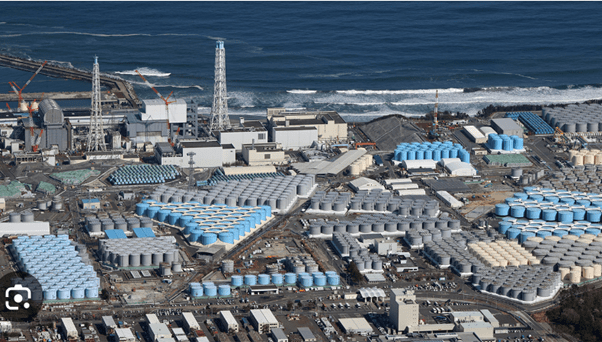
Japan has been storing treated water from the damaged Fukushima nuclear power plants in large tanks. There are about a thousand tanks containing 1.2 million tonnes of water.

Japan has begun releasing treated wastewater used to cool down the nuclear reactors damaged by the tsunami in March 2011.  The water has been treated to remove radioactive material, but small quantities remain. Tritium is hard to remove as it forms part of a few of the water molecules.  There are very small quantities of carbon 14 and there may be even smaller quantities of strontium and iodine isotopes.  Most of the latter were dispersed by May 2011.

Tritium is formed naturally every day in our atmosphere and added to the oceans and land as rainwater. Any taken into our bodies comes out fairly quickly in our urine. Radiation from tritium is weak beta rays. These rays do not travel far and are stopped by skin. Unless the dosage is extremely high, our bodies quickly repair any damage caused.

The release from Japan into the Pacific Ocean can be made to sound bad and scary. “But it actually isn’t. Similar releases have occurred around the world for six decades, and nothing bad has ever happened.

“The radioactivity in the Fukushima water is almost entirely tritium, a type of hydrogen. For scale, the Pacific Ocean contains 8,400 grams of pure tritium, while Japan will release 0.06 grams of tritium every year. The minuscule amount of extra radiation won’t make the tiniest jot of difference. A lifetime’s worth of seafood caught a few kilometres from the ocean outlet has the tritium radiation equivalent of one bite of a banana.” according to Nigel Marks is a Professor in Physics at Curtin University

Tony Hooker, Director of the Centre for Radiation Research, Education and Innovation at The University of Adelaide says: “I would like to reiterate that the release of tritium from nuclear facilities into waterways has and is undertaken world-wide with no evidence of environmental or human health implications. “

Tony Irwin, an Honorary Associate Professor at the Australian National University is also Technical Director of SMR Nuclear Technology Pty Ltd and Chair of Engineers Australia Sydney Division Nuclear Engineering Panel: “There is an understandable perception that all radioactive materials are always and everywhere dangerous, particularly liquid waste, but not all radioactive materials are dangerous. The Fukushima water discharge will contain only harmless tritium and is not a unique event. Nuclear power plants worldwide have routinely discharged water containing tritium for over 60 years without harm to people or the environment, most at higher levels than the 22 TBq per year planned for Fukushima.

“For comparison the Kori nuclear plant in South Korea discharged 91 TBq in 2019, more than four times the planned Fukushima discharge and the French reprocessing plant at La Hague discharged 11,400 TBq in 2018 into the English Channel, more than twelve times the total contents of all the tanks at Fukushima, again without harm to people or the environment.

“It is important that the International Atomic Energy Agency (IAEA) has carried out an independent and transparent review of the procedures and equipment for discharges and its comprehensive report issued in July 2023 confirms that the release will have a negligible radiological effect on people and the environment. The IAEA will maintain a continuous on-site presence on site to independently monitor discharges.

“More tritium is created in the atmosphere than is produced by nuclear power reactors, and it then falls as rain. Ten times more tritium falls as rain on Japan every year than will be discharged. The discharge limit for release of radioactive water at Fukushima is 1/7th of the World Health Organisation standard for drinking water. The discharge is ultra-conservative.”

Thanks to https://www.sciencemediacentre.org/expert-comment-on-release-of-waste-water-from-fukushima-into-the-pacific/ 

A paper was published in August 2021 by seven Chinese authors with assistance from authors in the Netherlands, Ukraine, South Korea, and Spain with scary looking figures of their modelling of potential release scenarios by Japan. https://www.sciencedirect.com/science/article/pii/S0025326X2100549X

On closer examination problematic zones were about 0.1 Becquerel(Bq)/m3 of sea water. These scenarios were all assuming much faster dumping of the water than Japan actually plans. The paper itself gives the background concentration of tritium in the surface water of the North Pacific Ocean as around 50 Bq/m3 (0.2% increase, less than natural variation). Good luck monitoring any difference during the release except at the actual release point.

Japan plans to dilute the water in the tanks before release  with a maximum concentration of tritium in the release of 1,500 Bq/l. The WHO drinking water standard is 10,000 Bq/l.

The IAEA will monitor the release at various points in the dilution and release system. The data is available at

https://www.iaea.org/topics/response/fukushima-daiichi-nuclear-accident/fukushima-daiichi-alps-treated-water-discharge/tepco-data

To understand the monitoring system watch https://twitter.com/iaeaorg/status/1694605862621380652

As I write, the tritium concentration of the discharge is 207 Bq/l. This is way less than the tough standard Japan set itself of 1,500Bq/l. The gamma ray monitoring ensures the water does not contain other radioactive contaminants.

Mixed Feelings

Sometimes I can hold two opposing viewpoints in my head about the same topic. I used to blame this on my birthdate as I am a Pisces. Some people believe Pisces people are best represented by two or even three fish with their tails tied together trying to swim in different directions. I now know the term for this phenomenon, and we can all suffer from it. It’s called Cognitive Dissonance and can arise when our behavior does not match our values or when fears generated in our primitive emotional brain argue with our rational brain.

We have all been fed false fears about low dose radiation since the 1950s. This is sad because these fears fight with the scientific knowledge we have now about ionizing radiation. Nowhere is this seen more clearly than in Japan and Germany.

From a Japanese tourist brochure: Misasa Onsen is an old hot spring with a history of over 850 years. Its spring quality is one of the highest radon contents globally and has excellent healing effects on the body and mind. People have loved it for a long time, including those who come to the hot spring for medical treatment.

“Radon,” which is a weak form of radiation, is produced when radium is decomposed. The body’s metabolism becomes more active when exposed to radon, and the immune system and natural healing power are enhanced. In addition, when inhaled or drunk radon, it increases the antioxidant function and helps prevent aging and lifestyle-related diseases.

Misasakan Hotel pool in Misasa Onsen Japan

Radiation killed nobody at Fukushima, but the tsunami killed about 20,000 people. Yet the press keeps describing it as the Fukushima nuclear disaster.

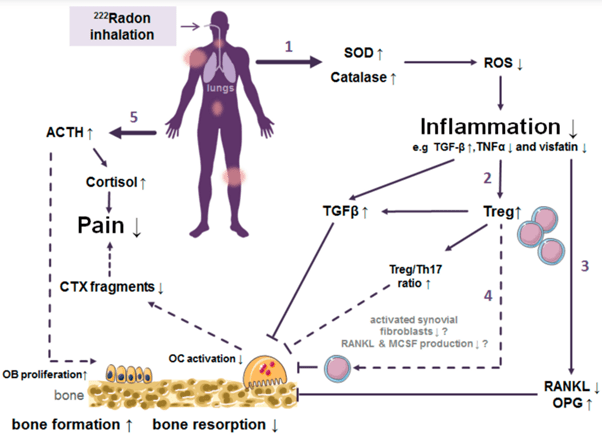
Germany has more radon baths than any other country. They are also particularly popular in Eastern Europe.  There are an increasing number of scientific studies looking at doses and ailments treated.  Pain relief from muscular skeletal diseases is well studied.

Despite all their spas which are being used more and more:

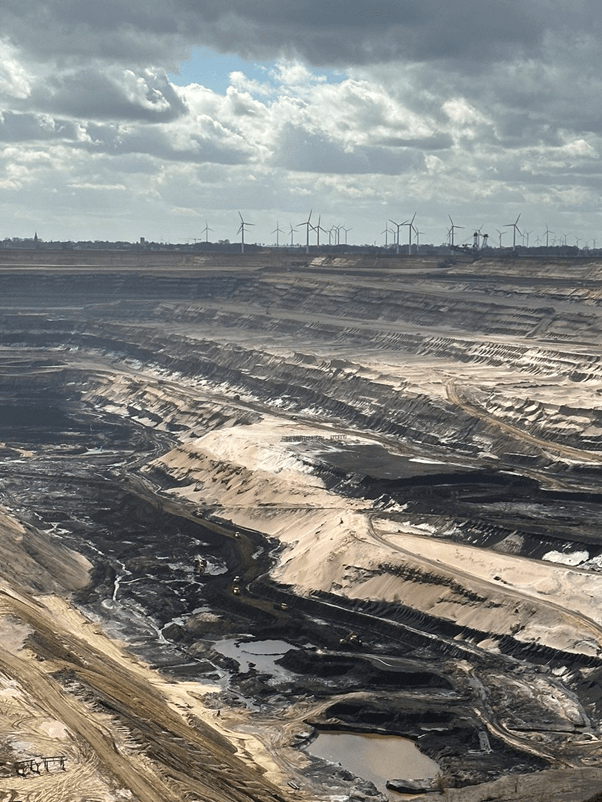
The German Solution – Close Nuclear Power Stations, Knock Down Ancient Forests to Mine  Coal.

The figure below shows a proposed mechanism of action when radon is used to treat patients with chronic musculoskeletal diseases (mostly ankylosing spondylitis, osteoarthritis or rheumatoid arthritis).

If you are interested in digging deeper, try this German 2020 review paper about Radon Spas: Radon Exposure—Therapeutic Effect and Cancer Risk     https://pubmed.ncbi.nlm.nih.gov/33396815/

1f Nuclear Accidents

The first nuclear power plants were built during a period when safety was not considered as it is now.

When I did my undergraduate degree in chemistry in the 1960s, most of the organic chemistry department personnel were missing an eye. We were not considered true organic chemists until we had at least one labelled mark on the ceiling from an accidental explosion. We used Bunsen burners, naked gas flames, to distill off flammable and often carcinogenic solvents. I knew just what to do when my hair, lab coat and books erupted in flame from burning ether. Big drums were used for the storage of solvents and when the lab finally burnt down, the explosions from each of the solvent drums sent up spectacular columns of black smoke. The Research Laboratory of ICIANZ where I had a holiday job burnt down a year or so after I was there despite the training we received to prevent and extinguish solvent fires.

When I went to the dentist as a child, the dentist gave me mercury to take home for play. I first held a big bar of uranium metal in my bare hands in 1962.

The first safety features for nuclear power plants were just tacked on as an afterthought. I will describe current safety features for nuclear power plants later in my series of blogs. Safety is now designed and built in, made triply redundant and checked and cross-checked by regulators.

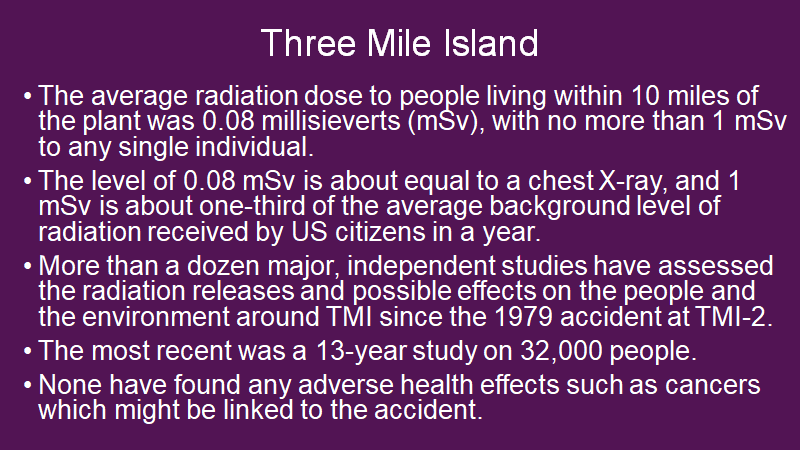
Three nuclear power plant accidents are well known. Using some of my slides from my presentations, the basic facts as best I can ascertain them are given below.

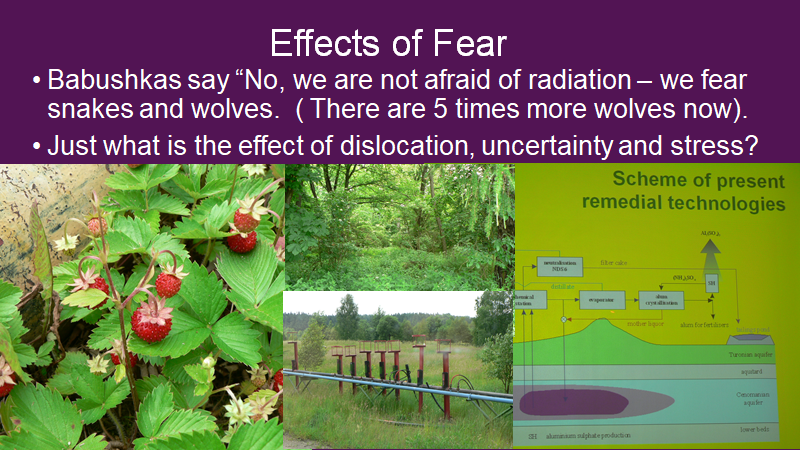
Fear caused all the health effects.

Chernobyl was a terrible happening. So many things were wrong including dreadful design with just a thin concrete cover and international coverup following the explosion. Documents are still being written about the details.

Recorded interviews with Babushkas are enlightening. “My friends who stayed away are all dead now and we are still alive.” 

Ukraine, the site of the Chernobyl disaster obtained almost half of its electricity from nuclear power plants in 2021. It was planning to build more. I have been presenting detailed updates about the happenings and safety of nuclear facilities in Ukraine during each presentation I do.

In 2008, My husband and I attended an International Mining Water Association conference in Karlovy Vary within the Czech Republic. The U.S.S.R. had pillaged its surrounding countries leaving massive legacies. One of the remediation projects we visited was a uranium mine with contaminated ground water. The rehabilitation scientists presented the chemical data and then took us out to view the works which were in their last stages. In one area there were beautiful, ripe, wild strawberries. I picked a strawberry and illogical fear erupted around me. I said, “You have seen the data, these are perfectly healthy to eat, and I am not worried.”  Suddenly, the men around me were trying the strawberries too and they were wonderful.

A friend who worked at the UN International Atomic Energy Agency (IAEA) in Vienna, told me in 2005 that the IAEA had learnt many lessons about how to manage a disaster at Chernobyl. A whole generation of rural farming children grew up without sufficient protein in their diets, eggs and milk being their traditional sources. Fear caused a lot of unnecessary damage. However, these lessons were forgotten or not learnt by Government authorities when a tsunami hit Japan.

Many studies have been published about the incidence of thyroid cancer in children following Chernobyl. A very large collection of thyroid tissue samples was collected from thyroid cancer sufferers. A very recent genetic study has shown that children receiving high doses of Iodine 131 soon after the disaster do have quite distinct genetic damage from that of children diagnosed with thyroid cancer since that time. (References:

  1. Yeager M, Machiela MJ, Kothiyal P, et al. Lack of transgenerational effects of ionizing radiation exposure from the Chernobyl accident. April 22, 2021. Science. DOI: 10.1126/science.abg2365.
  2. Morton LM, Karyadi DM, Stewart C, et al. Radiation-related genomic profile of papillary thyroid cancer after the Chernobyl accident. April 22, 2021. Science. DOI: 10.1126/science.abg2538.)

Iodine 131 breaks down very quickly. The following graph shows its decay curve. Half of it has decayed in 8 days and 99.9% in 80days.

Japan shut down many of its nuclear power plants. After very extensive safety testing and refurbishment, many of these power plants are now back in operation.

Antinuclear campaigners used the following picture with the heading shown on it to frighten people around the world. Yes, it is a graph produced by the National Oceanic and Atmospheric Association of the US (NOAA), but it is not a graph of radiation but of wave heights. It had no relation to radiation levels in sea water.

There is a tendency when people become sick, particularly with cancer, to blame nuclear radiation as the culprit. When I was head of the technical division for environmental regulation in mining in the Northern Territory the outcome of an investigation near Ranger Uranium Mine illustrated this point. Members of the Jawoyn people were becoming sick. They gathered food in a billabong downstream of the mine. The Jawoyn blamed the mine. Extensive monitoring of the food and water showed only very low background levels of radioactivity.  The investigations detected dangerous levels of raw sewage contamination. Bacteria were causing the sickness and the situation was soon rectified.

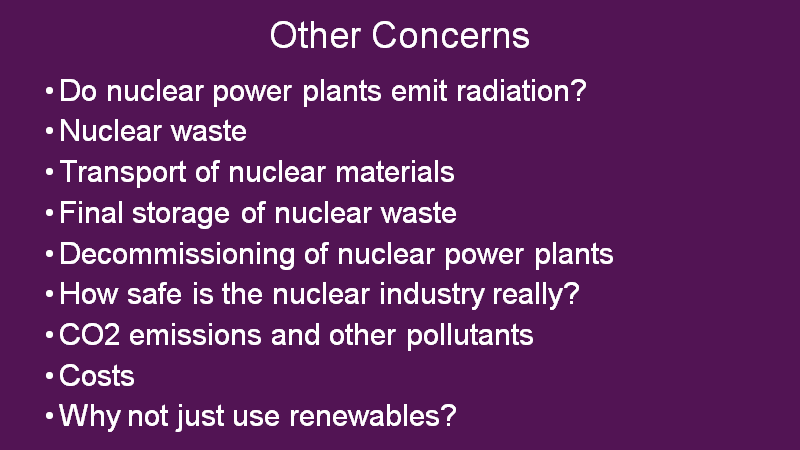
There are other concerns voiced about nuclear energy, and these will be discussed in later blogs.

1b Uncontrolled Power of any Type is Dangerous

Fear is one of the most basic human emotions. It is programmed into the nervous system and works like an instinct. From the time we’re infants, we are equipped with the survival instincts necessary to respond with fear when we sense danger or feel unsafe….

People fear things or situations that make them feel unsafe or unsure. For instance, someone who isn’t a strong swimmer might have a fear of deep water. In this case, the fear is helpful because it cautions the person to stay safe. Someone could overcome this fear by learning how to swim safely.

A fear can be healthy if it cautions a person to stay safe around something that could be dangerous. But sometimes a fear is unnecessary and causes more caution than the situation calls for. (Words quoted from https://kidshealth.org/en/teens/phobias.html.)

We also fear for those we love.  A mother’s fear for her children can be particularly strong.  This latter instinct has been utilised by anti-nuclear power campaigners very effectively.  Anti-nuclear campaigners are very genuine in their fears which I believe is based on emotional thinking.  Historically, there were good reasons for their fears, and I will address some of these reasons in future blogs.

A look at the early days of nuclear power show little regard for safety.  Indeed, safety played only a small part of life just after WW2 and into the 50s.  Nuclear bombs were tested. Nuclear proliferation was rife during the Cold War.  Nuclear power and nuclear bombs were linked in our minds.  This does not apply now.  The technologies are very different, the fuel used is very different. Nuclear power fuel uses slightly enriched uranium or is not enriched at all.  Nuclear weapons are very, very highly enriched and the fuel is technically difficult and horrendously expensive to produce.

In the 60s and 70s, our car broke down frequently, there were not even seat belts.  We cannot pretend those cars compare with our cars now.  New generation nuclear power plants are very different too. Indeed, safety was not considered in most areas of life in Australia.  As a young chemist, I remember many practices that would not be allowed today.

The recent floods in Australia illustrate this point. Anything can beneficial or harmful.  For example, we all know arsenic can kill but a couple of enzymes require arsenic as part of their structure. This probably even applies to nuclear radiation. It is rarely beneficial to have too much of a good thing

The rest of this presentation introduces some essential concepts of nuclear physics and chemistry – Nuclear 101 – and looks more deeply at fears we may have.

With this background you will be in a better position to make rational decisions about nuclear power.