

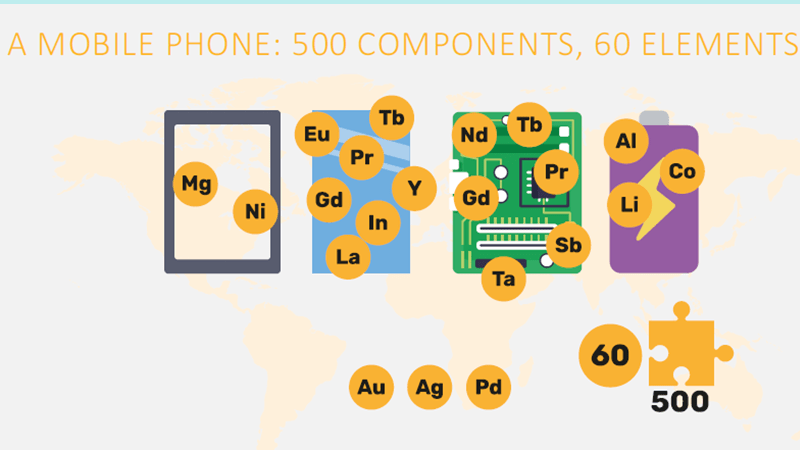
Delft University has examined the supply risks for the EU




The EU has set up some technologically advanced recycling centres. But if we look at where most of the waste is going, at this stage we have to assume that little recycling is actually undertaken. The most expensive part of recycling is the collection and segregation of waste.


This is a patch of water that you would not want to fall into, unless you had a death wish. Having worked in the environmental field in China, I know that China is doing as much as it can as quickly as it can to clean up the environment. As the population of China and Mongolia become more wealthy, they are not prepared to work under these conditions much longer either.

The recent happenings in Europe are letting us all know that we should not take any of our supplies for granted. Even the biggest cobalt mine in Africa is owned by China.
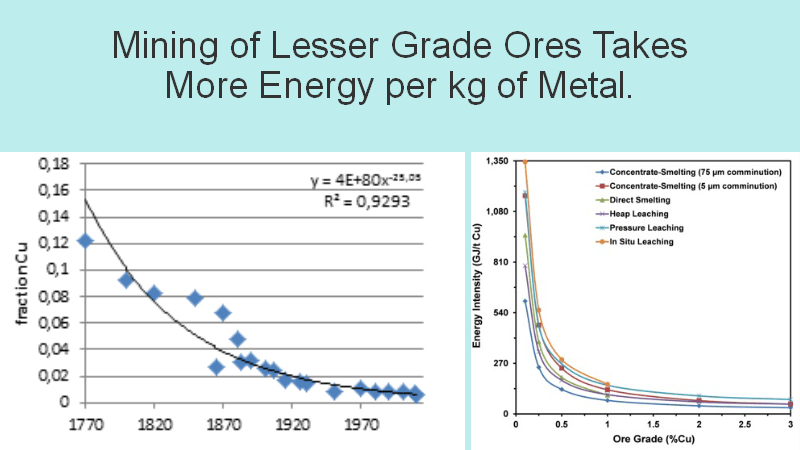
I often read that nuclear power stations take too long to build. Having worked in the mining industry, I also know how long it takes to open a new mine and start production even after the resource has been located and quantified. Over time we have gradually been mining lesser grade ores.


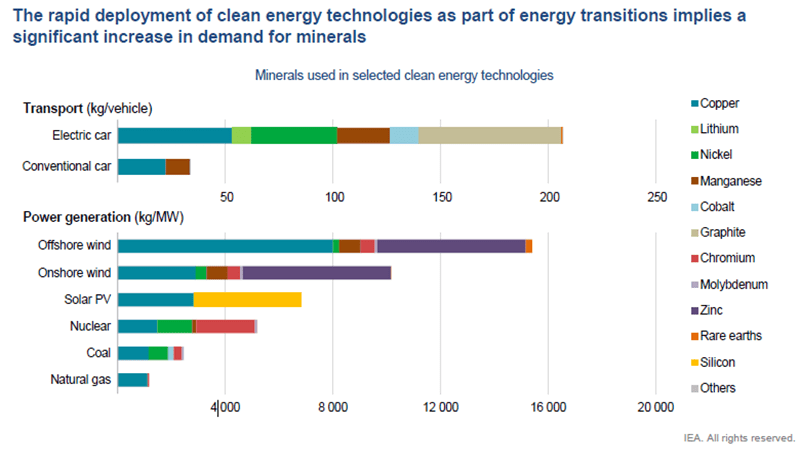
When looking at any of the graphs and data on these complex questions, the questions of what, what type, made where, when, complicate the matter further but the big picture is clear. We are likely to have supply issues if we plan to have massive amounts of renewables built in the next decade or so.
Since these slides were put together, Tesla has already stated that they have supply issues. The waiting period for the purchase and supply of electric cars in Australia is already long. Wind turbine manufacturers are fighting to retain profitability as prices of raw materials fluctuate. Mining companies are loathe to risk capital when the metal market fluctuates as much as it does.
What does this all mean? It has been estimated that hundreds of thousands of hectares of forest have already or will be soon destroyed to undertake the mining needed to provide even a portion of the metals and other materials needed for the renewable industry. This will result in massive loss of biodiversity, and all the benefits the forest provide mitigating climate change. If we’re not careful, this will be worse than a zero-sum game. I have yet to see any estimates of just how many materials will be needed for the amount of wind power and solar power that some countries are aiming to use. In the meantime, the US is closing nuclear power stations before they have replaced the power sources that these stations produce.
Some of the mining needed and much of the waste from renewables will impact heavily on the world’s poorest people. In some ways, this is even worse than slavery, because their lands become badly contaminated with toxic substances that don’t disintegrate in 100,000 years but there for ever. The cost of remediation will probably be too high to ever be undertaken.
Another cost and need for materials arises from all the new transmission infrastructure required, partly because power sources are scattered but also because much of the infrastructure was built many decades ago and needs replacing.

This next slide illustrates what a little ingenuity can solve. Instead of bare burned-out soil, solar farms could be very productive. Rain off the solar panels runs into gutters then storage tanks and used for irrigation. Sunlight and rain can directly pass to the soil. Some shading of the soil as temperatures climb could be very beneficial for some crops. However, it should be noted that more materials will be required for the same electricity production. I have also seen photos of solar panels being placed over irrigation channels in India. In this way, no extra space is needed and loss of water through evaporation reduced.

To to keep up the positive side, please enjoy the following cartoons.

 My Blog has become My Nuclear Journey