
Anti-nuclear groups in Australia have been given a new weapon for their arsenal of outdated fear campaigns. Recently published epidemiological studies linking cancers and heart disease to nuclear industry workers are being spread as established fact by Margaret Beavis, Climate Council, ACF and FOE and even the Labour Party.
So much damage has been done by those who instil fear of ionising radiation in others. The “holier than thou” attitudes developed during the cold war are now very outdated. There are well-meaning groups of scientists, particularly epidemiologists, environmentalists and regulators who find it in their best interest to hang on to outdated information. Paradigms about radiation that began in the 50s and 60s have not changed despite all we have learnt about biological repair mechanisms and low dose radiation. It is a bit like comparing the safety of a modern aeroplane with the Hindenburg hydrogen airship. Why does this happen?
What is a Paradigm?
A paradigm is an interlocking set of assumptions about the operation of a complex system. It is a model of how the system works. Once accepted by the scientific community, a paradigm tends to channel attention and research funding into “acceptable” directions. Observations that fail to fit the paradigm may be ignored or suppressed. This is not a conspiracy but, instead, a reflection of human nature. When we believe something to be true, we discount alternative statements that contradict the “truth” as we perceive it. In general, a paradigm must be conclusively disproved before a new paradigm can be accepted.
It can really hurt to find out your beliefs of decades are not true.
Even twenty years ago, there were over 3,000 scientific papers published in reputable journals concluding that low dose irradiation is stimulatory and/or beneficial in a wide variety of microbes, plants, invertebrates, and vertebrates. Using the parameters of cancer mortality rates or mean lifespan in humans, no scientifically acceptable study was found which showed that less than 100mSv was harmful. https://pmc.ncbi.nlm.nih.gov/articles/PMC2477686/
A reward was even offered for any one report in English with scientifically acceptable evidence of harm (increased cancer death rate or decreased average lifespan) from low dose irradiation in normal (not immune deficient) humans or laboratory animals. The reward was not claimed.
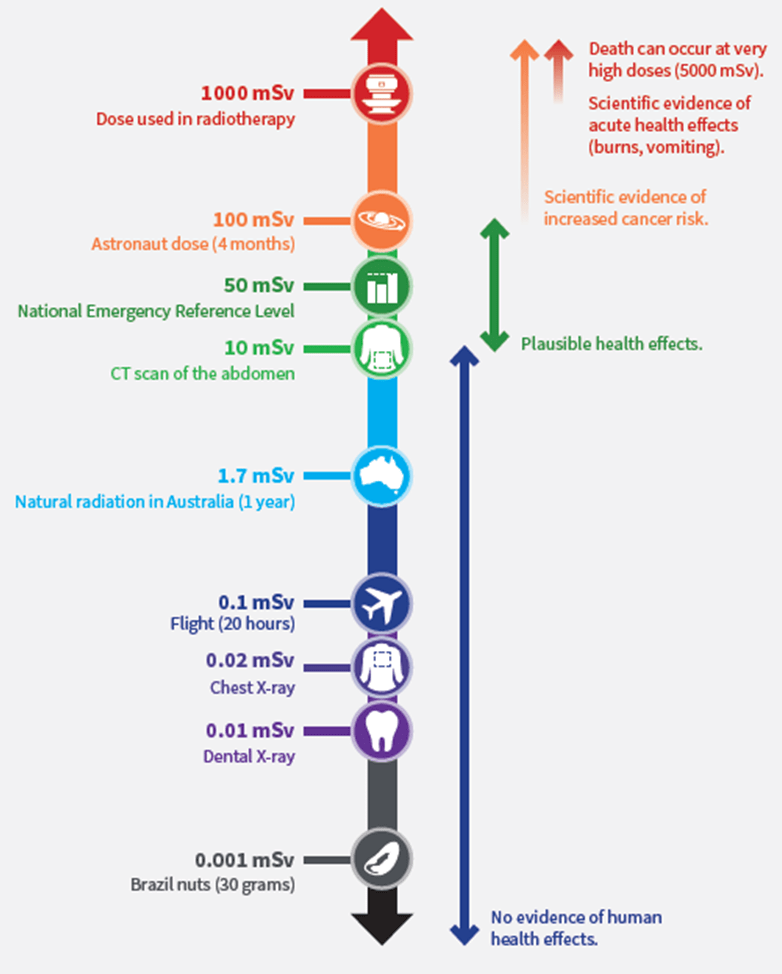
In this blog, radiation levels greater than 100 mSv are not considered to be low dose. In some medical literature the term low dose is used for much higher levels of radiation. High doses of radiation have very different effects on living entities and can harm and kill. Repair mechanisms are overwhelmed.
Epidemiological Studies
In a classic science experiment, only one variable is changed at a time. All other factors remain the same. BUT this is only possible when working with simple systems such as in some basic physics or chemistry experiments. The real world is very complex, and biological systems are extremely complex. It becomes impossible to control all influencing factors – “confounding factors”. When confounding factors have more influence on the result then the variable under consideration, scientific evaluation becomes extremely difficult. This is the reason why it took so long to prove that smoking could cause lung cancer. The more complex the system studied, the more complex the mathematical statistics used becomes.
There are many types of epidemiological studies. When there is no control population used, and the data is simply observational and collected after the effects, a retrospective cohort study is the only choice. Cohort studies can never prove causation. They can only suggest a hypothesis for more detailed study. If data are collected after the fact, a cohort study becomes even more unreliable. When a medical effect is very rare, very large numbers of people are required for the study and statements of relative risk become almost meaningless. Attempts to discount confounding factors may be made. It is simply impossible to deal with all confounding factors.
To try and obtain a result, many mathematical manipulations are undertaken on the data. In studies about radiation, different groups sometimes publish completely opposite results because the mathematical formulae used on same data set are different.
For over 70 years, radiation epidemiologists have fallen into 2 camps. Those that fully support the Low No Threshold (LNT) Hypothesis to explain radiation health effects and those that spurn its use or simply accept the status quo for now for regularity purposes.
The LNT Hypothesis
The LNT Model was formulated on data from the 2 atomic bombs dropped on Japan at the end of WW2. It is based on the following assumptions:
- Radiation exposure is harmful.
- Radiation exposure is harmful at all exposure levels.
- Each increment of exposure adds to the overall risk.
- The rate of accumulation of radiation exposure has no bearing on risk.
No Hormetic Effect:
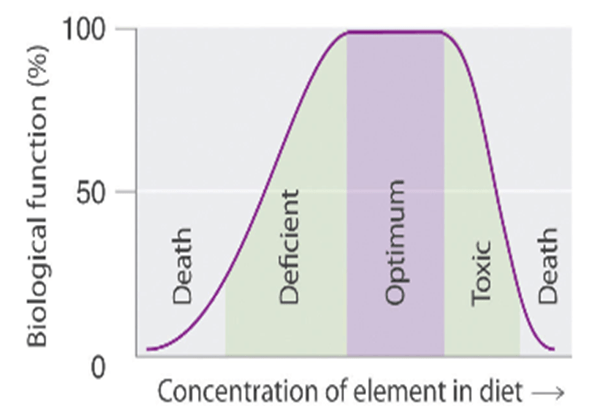
The model does not consider the possibility of any beneficial effects (hormesis) or stimulatory effects from low doses of radiation. It assumes that any increase in radiation exposure, however small, is detrimental.
It Doesn’t Recognise Biological Repair Mechanisms:
Our knowledge of the biochemistry of molecule, cell and tissue damage and repair mechanisms has grown enormously since the 1950s.
Dr. Antone L Brooks, the Chief Scientist for the US Dept. of Energy’s Low Dose Radiation Research Program from 1998 to 2008 continues to publicize in his quiet manner that we knew better well over a generation ago that the assumptions of the LNT Model are not correct. He has stated many times that despite its simplicity when used for regulatory purposes, the LNT model overestimates the effect of radiation on living things and should not be used to estimate health effects. Many other voices say the same.
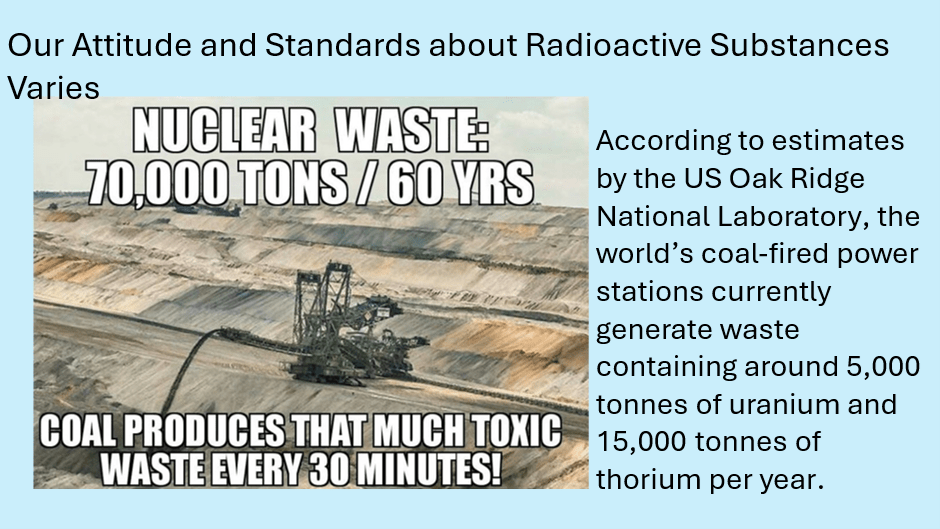
The LNT is used by many countries for regulatory practices. It is extremely conservative and hence standards for radiation protection are probably overly protective. For example, the US NRC and US EPA endorse the model, while other professional bodies such as the Health Physics Society and the French Academies of Science and Medicine deprecates it.
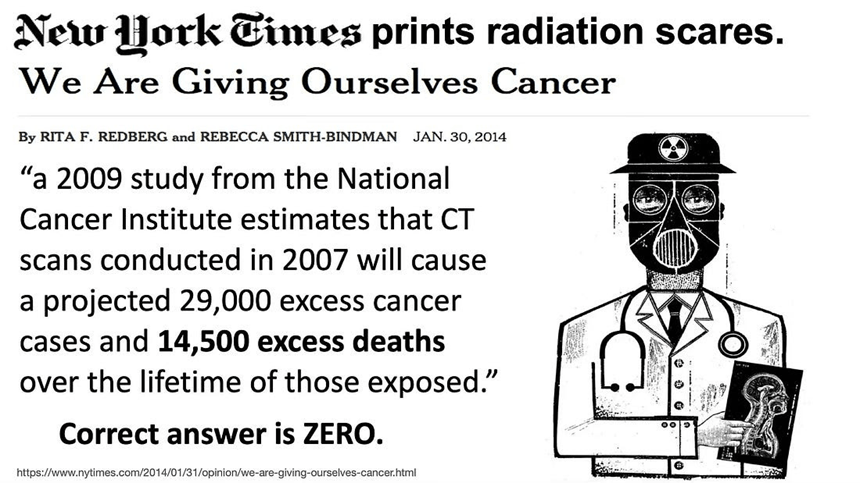
Unfortunately, this approach has led to unreasonable fear of radiation and excessive time and money costs. The LNT model works for high dose single exposures.
One of the organizations for establishing recommendations on radiation protection guidelines internationally, the United Nations Scientific Committee on the Effects of Atomic Radiation (UNSCEAR) that previously supported the LNT model, no longer supports the model for very low radiation doses.
The Australian Radiation Safety and Advisory Council in their Position Statement to ARPANSA on the use of the LNT model in ionising radiation protection states that:
“The appropriate use of the LNT model has enabled effective radiation protection systems. However, the inappropriate use of the LNT model has inadvertently increased community fear of ionising radiation. The Council advises that extremely low doses of ionising radiation may be associated with no or an extremely low risk of harm.
Incorrect emphasis on potential risks associated with low radiation doses and dose rates can have negative impacts as it can prevent health, medical, environmental, social and economic benefits being realised. In adopting the LNT model it remains essential to balance the low risks of low-dose ionising radiation exposure against the benefits of the radiation. https://www.arpansa.gov.au/sites/default/files/rhsac_-_position_statement_on_the_use_of_the_lnt_1_may_2017
Cellular Repair Mechanisms

When it comes to cancer, the main concern is DNA damage. Living tissue is made up of cells. Cells are mostly water. If a radioactive particle enters a cell, it transfers a portion of its energy to the cell mainly by breaking the chemical bonds that hold the water molecule together. This creates highly reactive, free radicals which can disrupt the cell’s chemistry including damaging the cell’s DNA. But do you realise that almost all free radicals are created by our use of oxygen to turn our food into energy?
Most of the DNA damage is single strand breaks, in which only one side of the double helix is disrupted. Single strand breaks are astonishingly frequent, >10,000 per cell per day. Almost all these breaks are caused by free radicals produced by the cell’s own metabolism. These are repaired almost automatically by the clever structure of the DNA molecule itself, with the undamaged side serving as a template.
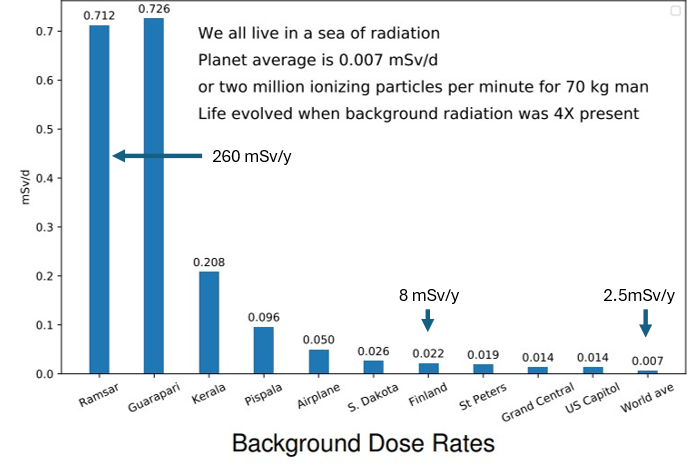
But occasionally we get a double strand break (DSB). It’s the DSB’s that can start the process that may result in cancer. Cell metabolism generates a DSB about once every 10 days per cell. Average natural background radiation creates a DSB about every 10,000 days per cell.

The Cellular Changes Needed to Initiate Cancer Have Not Been Observed at Low Dose Rates
At least 6 to 8 of specific cellular changes must occur for cancer to result. The “Hit Theory” of DNA mutation as a cause of cancer is way out of date.
These changes are only seen at single high doses of radiation.
Some of these hallmark changes include avoidance of immune destruction, deregulation of cellular energetics and resisting cell death. A simple diagram of the hallmarks of cancer is shown below. Knowledge of cancer mechanisms has progressed enormously since this diagram was first formulated.
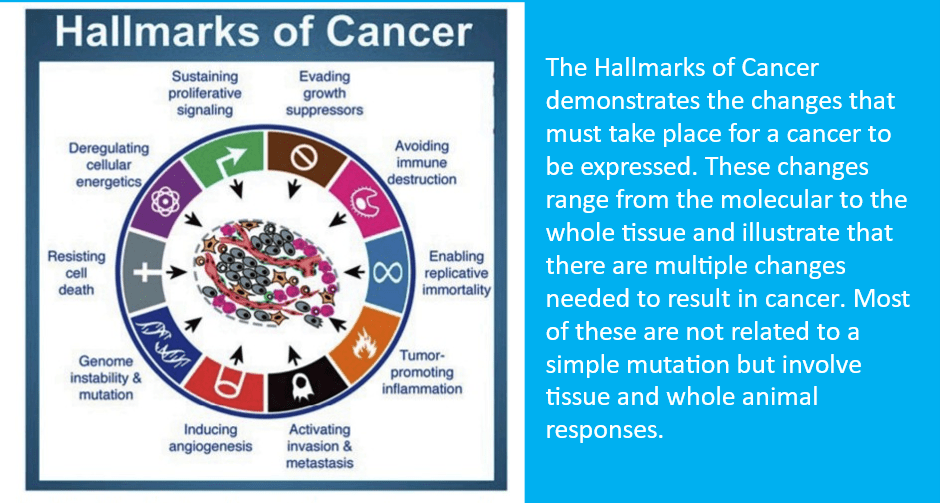
https://www.cell.com/fulltext/S0092-8674(11)00127-9 This paper has been cited >81,000 times. For a more up-to-date and detailed view see https://pubmed.ncbi.nlm.nih.gov/35022204/
The INWORKS Studies
The International Nuclear Workers Study (INWORKS) is a large series of international epidemiological papers on workers in the nuclear sector. It was launched in 2011 and coordinated by the International Agency for Research on Cancer (IARC). The study combines data from nuclear workers in the UK, US and France for pooled analysis. It seeks to gain greater knowledge relating to the risks of cancer and non-cancerous diseases linked to chronic exposure to low doses of ionising radiation at low dose rates.
INWORKS followed on from 15 Country Study published in 2007 https://pubmed.ncbi.nlm.nih.gov/17388693/ (Among 31 specific types of malignancies studied, it was concluded that a significant association was found for lung cancer and a borderline significant association for multiple myeloma with a strong healthy worker survivor effect in these cohorts.
The healthy worker survivor effect has been assumed repeatedly whenever an analysis has shown that the cohort studied indicated less risk to nuclear workers. Slight variations in the cohorts are analysed by different techniques or parts of the cohort left out of the calculations or different methods are used to define the radiation levels experienced by workers. Many confounding factors were not considered. One of the most important of these is the lack of consideration of different background levels of radiation. Nor were there records of medical exposure such as CT scans or cancer treatment.
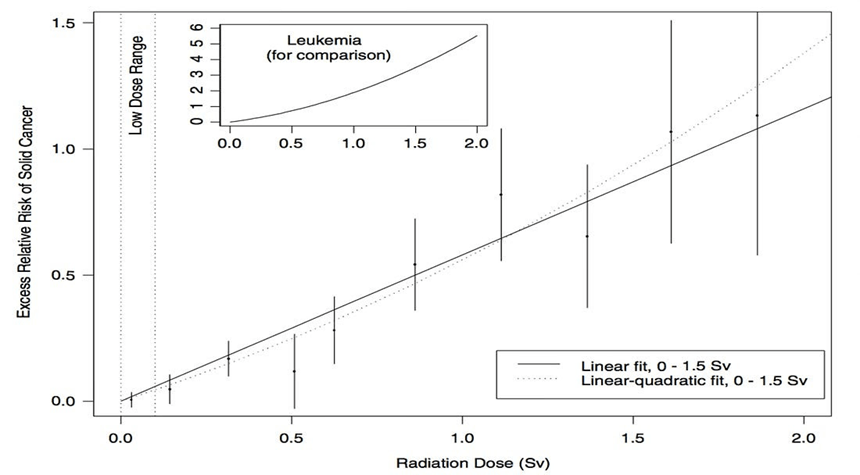
Most of the graphs shown have huge error bars yet excess relative risk is quoted with up to four significant figures. The slope of the LNT model is even used in some calculations. Many of the dozens of papers published are in the form of minimum publishable units, which makes it hard to fully understand exactly how some of the final analyses were undertaken and the conclusions reached. The INWORKS consortium has recently stated that they will not release their basic data so others can analyse it independently, claiming confidentiality problems. One of the basic tenets of the scientific method is reproducibility by others.
Some of the papers have been published recently in 2023 and 2024. A few of the relatively recent papers are: https://www.bmj.com/content/382/bmj-2022-074520 https://doi.org/10.1016/S2352-3026(24)00240-0, and on circularity issues: Radiation Research 188, 276–290 (2017) DOI: 10.1667/RR14608.1. Haematological malignancies https://pmc.ncbi.nlm.nih.gov/articles/PMC11626443/ or the SELTINE study https://pmc.ncbi.nlm.nih.gov/articles/PMC9817793/#:~:text=3.2.&text=Supplementary%20Table%20S1%20shows%20the,CI:%200.69%E2%80%930.73). Some information on the cohorts used is given in https://pmc.ncbi.nlm.nih.gov/articles/PMC4703555/pdf/nihms723379.pdf
It is the results on these studies that are being published ignoring the rest of the literature, particularly detailed criticisms of the work. The quoted error ranges are huge. Some of the graphs could even be used to suggest that low- dose radiation lowers the workers chance of cancer – a hormesis effect. For a more detailed critique of some of the studies see https://pmc.ncbi.nlm.nih.gov/articles/PMC5974569/pdf/10.1177_1559325818778702.pdf
Government websites simply republish the “results” without interpretation or perspective. Usually, the way the results in the papers are given would be meaningless to most readers. However, I did read in one abstract today that the radiation attributable absolute risk of leukaemia mortality in this population is low (one excess death in 10 000 workers over a 35-year period) https://pmc.ncbi.nlm.nih.gov/articles/PMC11626443/
So, should we trust recent claims that low-dose radiation causes cancers and other health issues? What is the truth? Do we really know?
Some epidemiologists have been trying to prove that low-dose radiation is harmful and that the damage does accumulate for decades, and they are still trying. It is certainly possible that a few people may be affected in some way, but the risk is so small, one must ask why not concentrate on protecting people in other industries where carcinogenic substances are far more common.
We do know that most cellular responses to low-dose radiation are protective and positive. There are a couple of changes that may be positive or negative depending on the state of a cell. Nothing in life is perfect but the more biochemistry we learn, the more impressive is the chemistry of life. It seems likely, based on recent research work that cells may even need some low-dose radiation to thrive. After all we did evolve with ionising radiation.
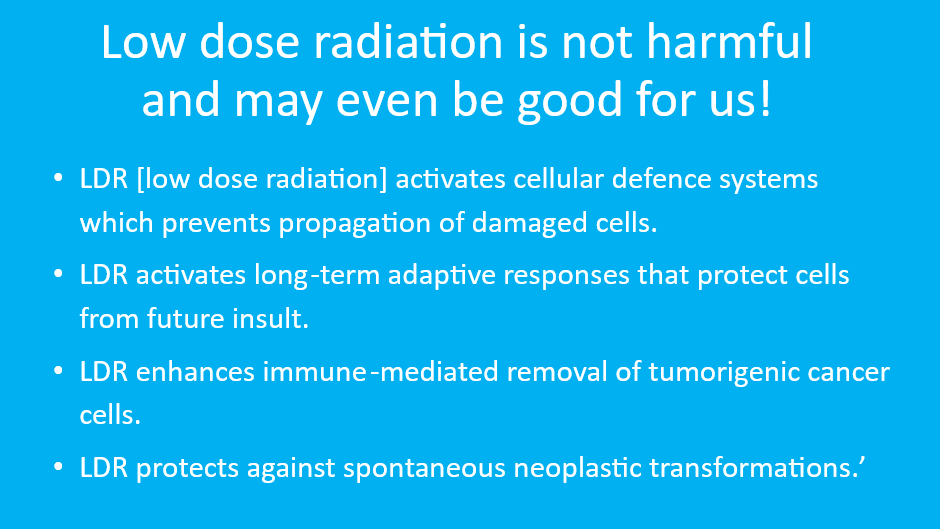
Is it time that we found a “healthy” middle ground?


For more information about background radiation levels: https://onewomanjourney.com.au/2024/12/30/background-radiation-how-much-radiation-do-we-experience-on-earth/
Please let me know if you would like more information on any of the topics in this blog.




















 My Blog has become My Nuclear Journey