Finding The Right Balance

This is a difficult challenge. It is one we all face daily. But it is a particularly hard task for politicians. Working out policies with the right balance between the needs of constituents today and the future of a country is essential. So far democracies under strong benevolent leaders seem to do this best. The 20th Century attempts at Communism and Nazism failed.

Source unknown – copied from a friend’s Facebook page.

The cartoon suggests that the balance fails because of greed and entitlement. But is that always the case? To get the balance right, there does need to be enough people pulling the wagon to balance the load in the cart.

What Causes the Imbalance?

In Australia a number of factors suggest themselves. They have arisen over many decades and/or the leadership of many political parties.

We are an aging population.

After WW2 we had an explosion of babies. Yes, I am one of the early Boomers.

We are no longer have enough babies to replace ourselves. This is not just happening in Western Nations and is worthy of a blog or two as are many of the following topics.

We have the highest proportion of public servants in the world

We also have a great many entities servicing the programs of the public servants. While these entities and their staff pay taxes, it is only a proportion of the tax money paid to them to undertake these services.

We decided that Service Industries were the Future – “The Clever Country

We belittled manufacturing and the skilled personnel that created so much of what we now buy from China or India. We stopped most manual arts courses at schools. We belittled TAFE and valued a university education more. Did we get the balance right?

Today’s Labour Laws ask Tradesmen to take on Apprentices and Pay For Them

Tradesmen tell me that most apprentices have few skills and take up a lot of their time and money. When they are finally paying their way, they leave.

When my tradesman husband did his apprenticeship in the 60s, he was paid barely enough to cover the cost of travelling to work. He went to Technical School after work in his own hours. In other words, he was treated like a student.

We believed in a Global Playing Field

Australia removed all its tariffs and protection for local industries and tried to compete on the global stage when most of our competitors kept their tariffs and Government support. And yes, that does include China.

Many of our Small Businesses are in Trouble.

Their operating costs are too high. They are failing and closing their doors. Any incentives to take financial risks and work long hours are disappearing.

Do we need to support and laud our farmers more?

Australian farmers are very efficient in world terms, yet we are asking them to take more and more of the financial risk with lesser return. We show them little understanding.

We bring in lots of immigrants

We need their skills and their labour, but we don’t have the infrastructure to support them. Housing is expensive and insufficient.

Finding the Balance between Protecting the Environment and Development.

As an environmental scientist working within development projects both here in Australia and in Asia, I see a system that is not working. It is not balanced. There seems to be a current belief that there has to be a choice between one and the other.

Our city planning is woeful. We are building cities that will suffer badly as the world keeps heating up.

We seem to believe that it is necessary to pay big dollars from our taxes to overseas entities for the energy transition while harming our forests and best farming regions while killing off koalas in the process. Nuclear power takes up far less land and resources.

We Need to Use our Resources Wisely

There is now a fight between “renewable” energy sources and fossil fuel use. Fossil fuels are only partly used to make electricity. They are valuable feedstocks needed to manufacture so many of the products we rely on from pharmaceuticals to surfboards. We shouldn’t be just burning fossil fuels and turning them into carbon dioxide. What a waste! We are wasting the limited resources of future generations.

We need to plan our energy systems with a balance of resources for now, while transitioning as we can in a balanced way. We need to remember that much of the renewable energy assets we have now will need replacing before 2050. Nuclear needs to be part of the solution. We have used some form of wind or solar power for hundreds of years. It is likely that various forms of nuclear power will provide much of our energy in generations to come. Why are we letting Australia fall so badly behind?

Is Intergenerational Equity Being Lost?

Nothing takes more weight off the next generation than being as self-sufficient as possible while husbanding our natural resources. I want my great grandchildren to enjoy and treasure the natural world that does so much for us.

When I retired decades ago, Australia did not have big government debt. We owned our own house at last; we kept working part-time in a small business and put money into super as we both had parents that lived long into their 90s. We volunteered in community organisations.

Are we greedy and denying the next generations a home of their own? We have helped our own children with school fees and with buying a home. They in their turn are helping their children. As self-funded retirees, we pay for most of any services we receive and now worry we may not be able to afford to go into an aged care home with the proposed new taxes. Our first house had 2 bedrooms, it needed a new roof, had no sewage connected and was made of asbestos. We could not afford a telephone for years, social life had to be “bring a plate”, no eating out or having a beer or coffee. We did not buy magazines or newspapers for years. (Thank goodness for libraries). Our home loan interest rate was 14%.

Actually, we had a lot of fun in those years and we still do.

Wind Turbine Generated Infrasound Can Travel 50- 90 Km

Images by Stephen Nowakowski

Infrasound Can Harm Humans and Wildlife

Infrasound is sound with a frequency below 20 Hz. It is normally not perceptible to the ear, but it can affect animals and humans (negatively) if the levels are sufficiently high. What makes infrasound special is that it travels very far, as it is barely attenuated by the atmosphere, ground, or walls. It can pass straight through walls without significant attenuation. Sounds with higher frequencies are attenuated by the atmosphere and bounce off walls. Even though we may not hear it, physiological responses have been measurabled.

Health risks with Infrasound – Research from Sweden

Professor Ken Mattsson of Uppsala University Sweden explains:

“The fact that most people don’t hear it doesn’t mean it’s harmless. It is a common misconception that you have to hear a sound in order for it to affect the body. There is research showing that infrasound affects the brain and the autonomic nervous system even at levels well below the limits used today. The problem is that we have an old view of noise, focusing only on what is audible. But the research has shown that even inaudible sound can have physiological effects. Infrasound can create stress reactions in the body, affect sleep and trigger migraines, and this is an area that should have been researched much more than it has been done.”

Several studies suggest that infrasound can cause a range of negative health effects such as insomnia, migraines and high blood pressure.

Approximately 30% of the population has an increased sensitivity to infrasound, and these people can be hit hard. I myself have experienced the effects. After measuring at wind farms, I can’t sleep for several nights and get heavy migraines. It is the same symptoms that many residents close to wind turbines describe. We’ve been out talking to people who live close to these works, and we hear the same stories over and over again – people get headaches, they feel a pressure in their heads, some get palpitations and others can’t sleep. And this is the big problem: there’s no escaping from the infrasound, it goes straight through walls and windows, and no authority has taken this seriously.”

How far does the infrasound spread from the wind turbines?

One of the most worrying aspects of infrasound is its long range. Unlike audible sound, infrasound is not dampened in the same way by the atmosphere but can travel very long distances without reducing in intensity. depending on the conditions, it is possible for the infrasound to be louder at 150 km from the source than it is at distances of 20 to 100 km from the source. This is very different from audible sound, which gets attenuated proportionately with the square of the distance from the source. https://www.sciencedirect.com/science/article/pii/S2210670722006126#:~:text=2022)%20report%20power%20spectral%20density,shifts%20the%20frequencies%20slightly%20higher.

The Attenuation of Infrasound with Distance

Infrasound levels can be significantly higher from downwind turbines compared to upwind turbines. 

Queensland is building wind turbines on the tops of the Great Dividing Range

How far will their effect travel? A few small turbines might be OK.

But the plans are for thousands to be built. We already know that some of our precious wildlife such as koalas and cassowaries communicate using infrasound. Their behaviour will be strongly affected and their ability to breed. Do we really know what will happen to humans?  

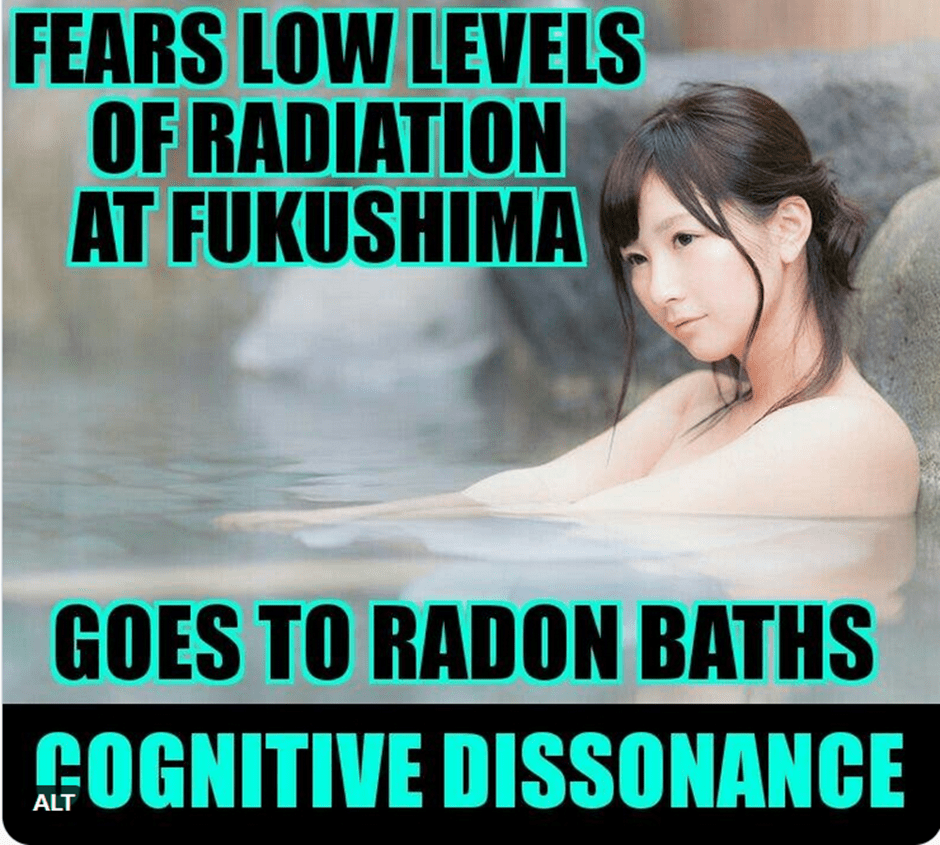
Cognitive Dissonance and Low-Dose Radiation

Germany has more radon baths than any other country. Yet they fear nuclear power plants. They closed them down and opened up coal mines knocking down ancient forests in the process. Medical benefit payments are paid out to people who attend the radon spas for relief of muscular-skeletal ailments. The medical fraternity warns of the dangers of radon yet people in pain still seek relief.

People have been using radon baths for thousands of years.  Low dose radiation seems to lessen the pain and immobility of osteoarthritis. But not every patient benefits.

https://www.fau.eu/2019/01/17/news/research/the-healing-effect-of-radon/#:~:text=Thermal%20water%20that%20contains%20radon,Steben%20Health%20Spa%20Research%20Association).

https://pmc.ncbi.nlm.nih.gov/articles/PMC2477705/#:~:text=Radon%20Via%20Bath%20or%20Steam,for%20three%20or%20more%20weeks.

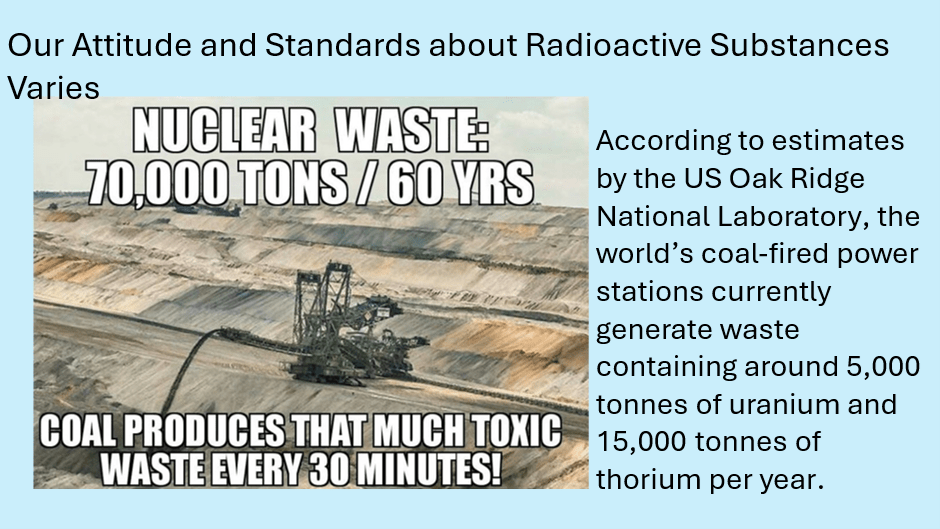
Many studies have shown that the more low dose radiation a population receives, the less cancer there is in the population. This effect is known as hormesis. I can also find studies that state that low dose radiation causes cancer.

 Is anything black or white or just shades of grey? Is anybody totally truthful? We all have our biases. To get a message across about cognitive dissonance I wrote “Low Dose Radiation is not Harmful and May Even Be Good for Us! Nobody Died from Radiation at Fukushima”

But panic and fear of radiation caused the unnecessary deaths of over a thousand Japanese people following the evacuation.

Every decision we make in life rests on our perception of the risk involved versus the benefits. That balancing act changes with circumstances. For example, the amount of radiation used for cancer treatment is huge. None of us would want to receive that much in ordinary circumstances. A medical specialist tells us it is our best chance of beating deadly cancer and we accept the treatment for 2 reasons. Firstly, the radiation will be applied under very controlled conditions to a limited area. Secondly, the whole balance of the situation has changed.

A few years ago, I didn’t agree that Australia should have a nuclear power industry. Did we plan long term enough? Did we plan carefully? Were we just too Gung-ho?

I am now watching the destruction of Australia’s wonderful unique biodiversity as we lose forest and mountain ridges to wind turbine projects in Queensland in the “fight against climate change”. Is the balance, right? Do we have to destroy nature to save the planet?

Ecologists, Barry W. Brook and Corey J. A. Bradshaw ranked 7 major electricity-generation sources (coal, gas, nuclear, biomass, hydro, wind, and solar) based on costs and benefits. They published a paper in 2014 called:  Key role for nuclear energy in global biodiversity conservation. https://conbio.onlinelibrary.wiley.com/doi/full/10.1111/cobi.12433.

This study still stands out. It used multicriteria decision-making analysis and ranked 7 major electricity-generation sources based on costs and benefits. It then tested the sensitivity of the rankings to biases stemming from contrasting philosophical ideals. Irrespective of weightings, nuclear and wind energy had the highest benefit-to-cost ratio.

The Integrated Life-cycle Assessment of Electricity Sources undertaken by the United Nations Economic Commission for Europe which concentrated on Carbon Neutrality in the UNECE Region has been extensively quoted by Oscar Martin on LinkedIn. https://digitallibrary.un.org/record/4020227?ln=en&v=pdf

Nuclear scored far better than wind power (and all other electricity generation types) on nearly all rankings with the exception of water use and of course radiation. Public and occupational exposures to radiation from electricity generation was far higher from coal and even geothermal systems than from conventional nuclear power plants. Likewise, every other of 22 assessed electricity generation types were more carcinogenic than conventional nuclear power.

Potential impacts such as specific biodiversity-related impacts, noise or aesthetic disturbance were not assessed under the land use analysis. Nuclear had the lowest lifecycle impacts on ecosystems, followed by various forms of wind and solar power. Under the land use assessment, renewable technologies were assumed to be readily built on various land types without heavy modifications such as land sealing, mountaintop removal, and flooding.

The assessment of land use which was used in the assessment of ecological impact for wind projects only considered the directly disturbed land (turbine pads, access roads) and assumed the surrounding land could be used for other purposes such as agriculture. For disturbed forests this leads to massive underestimation of the impact. Research in far northern Queensland is finding that impacts from wind turbines on some species in forests can extend 3 km or more from a turbine.

Nature is doing over half the work of reducing carbon dioxide levels worldwide. We can save nature and the planet. With a carefully planned mix of nuclear and other energy sources, we can preserve our biodiversity.

Yes, nuclear power is not 100% safe and clean. Nothing ever is. The benefits to humanity and nature are too great to ignore and far greater than the risk.

Australians for Nature and Nuclear!

How Important is Storage? A Blog By Dr David Jones

This is the fourth in a basic series about electricity written by Dr David Jones.

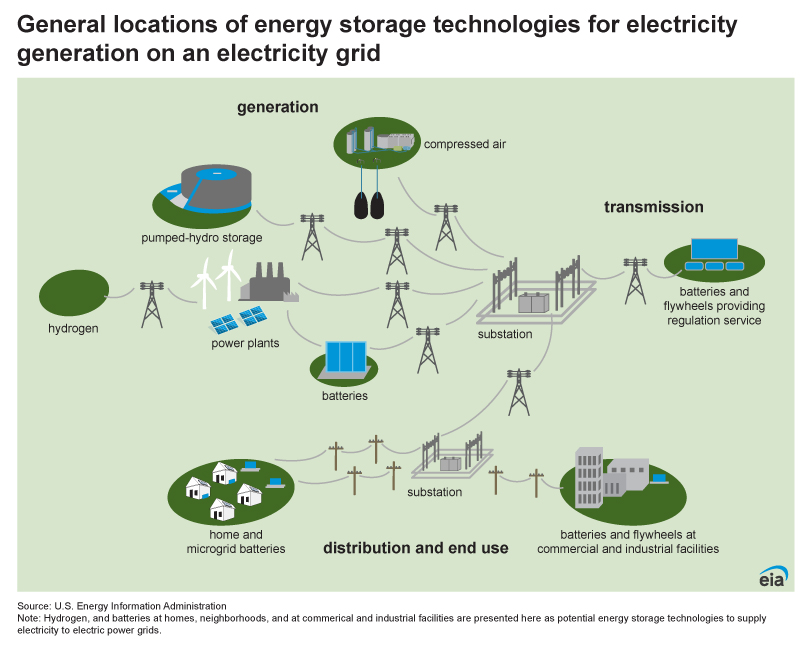
The 80% renewable electricity target by 2030 cannot be achieved unless there is sufficient storage in place for the output of variable renewables.

When you think about it, storage has always been a primary issue for electricity generation. In the case of coal there has always needed to be sufficient coal in bunker storage at a power station to feed the furnaces. Coal is a concentrated form of “solar energy” that was captured by plant photosynthesis many millions of years ago – so it is a form of energy storage. Likewise with gas.

As Australia transitions towards a planned renewables-based electricity generating system it will be critical to have sufficient storage to maintain power supply during periods when intermittent primary generation sources are not producing power. Shutting down existing dispatchable, fossil-fuelled generation before the required storage is in place will likely lead to frequent, unpredictable, widespread blackouts.

As discussed in a previous instalment, solar PV (especially rooftop solar) has a low capacity factor since electricity is only produced when the sun is shining. Let’s assume for simplicity that large scale solar PV with a capacity factor of 30% is the only source of generation. Electricity is produced during an 8h daytime window. What about the rest of the 24h period?

To ensure that sufficient electricity is produced for a 24h period, “surplus” electricity needs to be produced and stored during the day, for use during the dawn and dusk periods and through the night. This means that more than 3 times, over and above the daytime requirement, needs to be produced and stored. Thus, a 300MW nameplate capacity solar farm would be needed to produce 100MW, averaged over the 24h period, with sufficient storage.

The situation is more complicated with wind because of its intermittent nature, noting that the average capacity factor of an onshore windfarm in Australia is about 35%. However, in contrast to the regular and predictable day/night cycle for solar, wind is typically quite variable. So even with overbuilding x3 to allow for the capacity factor, if there is no wind (be it day or night) there will be no power produced.

So, we are going to need storage and LOTS of it, if our current electricity system is going to function with 80% renewables by 2030. What are we looking at for 2030 and how much more is going to be needed between now and then, and beyond?

Australia’s total current storage capacity is only 3GW. Current forecasts by the Australian Energy Market Operator (AEMO) show Australia will need at least 22GW by 2030 – a more than 7 fold (700%) increase in capacity in the next six years.

 The market operator’s https://aemo.com.au/-/media/files/major-publications/isp/2024/2024-integrated-system-plan-isp.pdf?la=en (ISP) forecasts Australia will need at least 49GW of storage by 2050 in order to reach net zero.

In my next instalment I will be taking a closer look at the main options that are being proposed for large scale storage – pumped hydro and batteries – and the challenges associated with them.