Worldwide, fossil fuel use spews about 37 billion tonnes of carbon dioxide into the atmosphere each year. Recent technologies have been used to determine just how much work forests do when storing carbon. Between 2001 and 2019, forests emitted an average of 8.1 billion metric tonnes of carbon dioxide per year from deforestation and other disturbances. At the same time, forests absorbed 16 billion metric tonnes of carbon dioxide per year.
Just imagine how much more efficient and cheaper it would be if existing forests were allowed to do their work in Queensland without disturbance. Denser forests and rapidly growing forests are particularly important. We should not forget that Queensland has nearly 40 % of Australia’s forests.
Hopefully, no one would argue that forests alone can save us from climate change, but they have a major role to play. If we do not protect forests as much as we can, we will suffer far worse climate change impacts.
The Climate Council states on https://www.climatecouncil.org.au/deforestation/
It is not effective to “offset” greenhouse gas pollution from burning fossil fuels by storing carbon in forests. This is because fossil fuels are pumping much more carbon dioxide into the atmosphere than existing forests can absorb. At the same time, carbon stores in forests and other natural carbon sinks will become increasingly unstable as climate change progresses. Droughts, tropical storms, heatwaves and fire weather are increasing in severity and frequency because of climate change. This will continue to result in increases in forest losses, contributing to more and more carbon dioxide being released into the atmosphere. Risks are significantly reduced but not avoided by keeping the rise in global temperature well below 2°C.
The future
Protecting natural ecosystems and sustainably managing and re-establishing forests are important ways to reduce greenhouse gas emissions and slow down temperature rise in the short term by drawing down carbon dioxide from the atmosphere. At the same time, we must deeply and rapidly reduce global greenhouse gas emissions levels from fossil fuels – coal, oil and gas. If we do only the former and not the latter, we risk transforming more and more of our carbon sinks into carbon sources as climate change progresses.
Oh Dear! Yes, there is a risk that we could lose all our forests to Climate Change and that really would be Armageddon. Should we just stay on our current path and let it happen? Man has a tendency to picture the worst. It is an emotional response from our primitive brains. This type of thinking makes excuses and leads to a lack of appropriate action. Let’s just run around in circles instead, wasting money and time. /sarcasm
Why are forests vital?
- Even now Earth’s forests are still capable of pulling nearly half the carbon dioxide produced by fossil fuels out of the atmosphere despite the clearing that has already happened. We must stop destroying our forests so that they can do this task to the greatest extent possible.
- Forests keep the earth’s temperature down by 1°C or more. This happens in a number of ways. They shade the ground. They pull heat out of the atmosphere by using the sun’s rays for photosynthesis, they manufacture many products some of which they pass to the organisms in the soil in addition to wood formation. They also cool their surroundings using evapotranspiration, a technique similar to our evaporative coolers.
- Forests are a very important part of the hydrological cycle and help to stabilise our climate in a number of ways. The soils below forests can be giant water sponges. This is particularly important on mountain ranges such as Australia’s Great Dividing Range. The water for rainfall passes down the mountain slopes much more slowly, preventing erosion and keeping our water clean and safe. The forest on mountain tops is important in cloud formation. It has been shown time and time again that rainfall is diminished if mountain tops are disturbed. In Australia this can lead to increased drought and flooding when it does rain.
- As well as being a stabilising force for the climate, forests regulate ecosystems, protect biodiversity, play an integral part in the carbon cycle, and supply goods and services including shelter and food.
In order to maximise the climate benefits of forests, we must keep more forest landscapes intact, manage them more sustainably, and restore more of those landscapes which we have lost (from a recent IUCN statement).
What is Australia’s record? Nearly 50% of our forest cover has been cleared in the last two centuries, making Australia one of the worst developed countries for deforestation.
In Queensland about half of our recent clearing activity has been in catchment areas of the Great Barrier Reef particularly south of Townsville. WWF was not wrong when in December 2022 it stated that Queensland remains the land clearing capital of Australia.
Have we learnt any lessons? No, now we are threatening the densest eucalyptus forests clustering around our wet tropical rainforests near Cairns.
Australia’s best winds to drive wind turbines are found in the south-west. Places like Tasmania lie in the path of the Roaring 40s. Because the wind doesn’t always blow, a myth was set up that the wind would blow in these periods somewhere else and where better than the far north-east of Australia. The performance of existing wind farms in Far North Queensland is low at best and abysmal frequently. When the strong winds of the North come, we call them cyclones and the turbines will be shut down and are likely to suffer damage.
So, the current plan is to desecrate hard-working tropical forests to build poorly performing wind turbines. This is neither effective or efficient in money terms or in climate change mitigation terms.
The forest areas threatened by all the wind energy projects on the books or already being constructed are some of the most valuable in the world.
Here is just another of my slides.
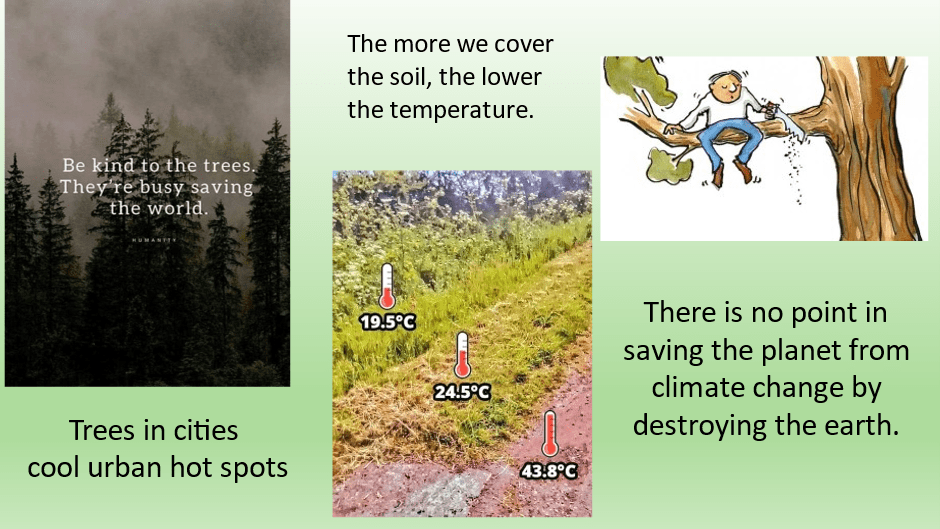
There are alternatives to this rampant stupidity.
In my next blogs I discuss some of these projects in more detail. In the meantime, you might like to look at this brochure from Rainforest Reserves.
https://drive.google.com/file/d/11JoRdwId1ChhBbIivPOCj5oEAMHKhdfd/view?usp=drive_link
Discover more from My Blog has become My Nuclear Journey
Subscribe to get the latest posts sent to your email.
 My Blog has become My Nuclear Journey
I likeyour Blog Pamela..particularly the importance of our forests /the miracle natural process that underlines all life as we know it and which makes planet Earth unique.
PHOTOSYNTHESIS..however i struggle to accept how a scientist can bandy about so called ( global temperature change of 1.5 to 2.0 deg) and is it not logical to assume that as the world increase in co2 from Russia India and USA surely the concentration would now be above 400PPMIL which is already at a historically low level.considering the Sahara /Egypt 6000yrs ago when covered with RAINFORREST recorded CO2 level approx 4000 to 5000 ppmil and the animals and flora flourished. Is it not true that if CO2 levels decline to approx 200ppmil life on planet Earth will cease.due to not enough plant food (CO2)…..
LikeLike